

 Golam Rabiul Alam, PhD
What if Apple’s future headset were more like a genuine pair of glasses: discreet, comfortable, and always on? A deep dive into the latest Apple VR Patent 2026 filings points to exactly that.
The most recent round of intellectual property documentation paints a picture of a second phase for the ecosystem, in which the focus shifts from a bulky, high-end “spatial computer” to practical, everyday-ready XR gear.
At a Glance
✓ Evolution to Everyday Wearables: Recent 2025 patents reveal Apple’s shift from bulky “spatial computers” to lightweight, comfortable smart glasses designed for all-day use.
✓ Next-Gen UI (Virtual Paper): Apple is patenting digital environments where users can physically manipulate virtual objects (like folding digital paper), moving beyond basic 2D overlays.
✓ Cross-Device Ecosystem: New filings confirm deep integration between Vision Pro hardware and the Apple Watch for advanced biometric feedback and gesture control.
✓ The Ecosystem Play: Apple isn’t just updating a single headset; they are building the foundational intellectual property for a multi-tier mixed-reality product line.
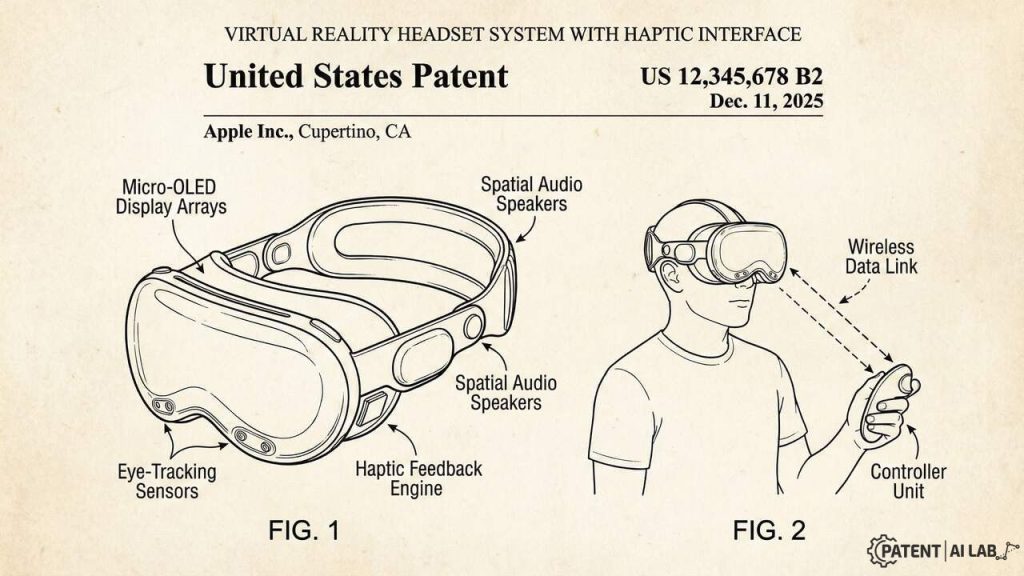
What’s happening behind the scenes of the Apple VR Patent 2026 filings
A change from stunning headsets to comfortable wearables
- A patent from 2025 talks about headbands and head-straps that make things more comfortable and fit better. In the future, devices might feel more like spectacles than stiff goggles.
- Apple’s accessory patents suggest modular designs, such as removable coverings, adjustable head mounts, and other changes that make a large headset easier to wear.
Beyond the screen on the wrist: toward mixed reality fluidity
- Apple has asked for a “virtual paper” system. In a VR/AR setting, you could grip, fold, and move digital stuff around like real paper. That means that material can interact with more than just 2D overlays.
- Another patent talks about how the Vision Pro and Apple Watch will speak to each other, maybe for location, biometric feedback, or controlling the interface.
- Apple has a patent for “holographic video sessions,” which means that in the future, you might be able to join a video conference with a 3D image of a person instead of a flat screen.
So, the platform changes from “a device for immersive VR experiences” to “a flexible platform for everyday spatial computing.”
Head-strap / Headband
More comfort, lighter wear.
Opens up all-day use beyond short gaming sessions.
Virtual Paper UI
Manipulate digital objects like physical ones.
Enhances productivity, creativity, and UI consistency.
Apple Watch Integration
Seamless multi-device ecosystem.
Intuitive gesture controls and biometric context awareness.
Holographic Sessions
3D video calls and shared spaces.
Real remote meetings instead of isolated content consumption.
The Evolution of Apple’s VR Patents
Here’s a quick visual on how Apple’s intellectual property around Vision Pro related tech has evolved.
Note: The numbers are drawn from public patent-filing reports—they illustrate the rising trend and do not represent Apple’s full confidential IP portfolio.
What most people don’t see
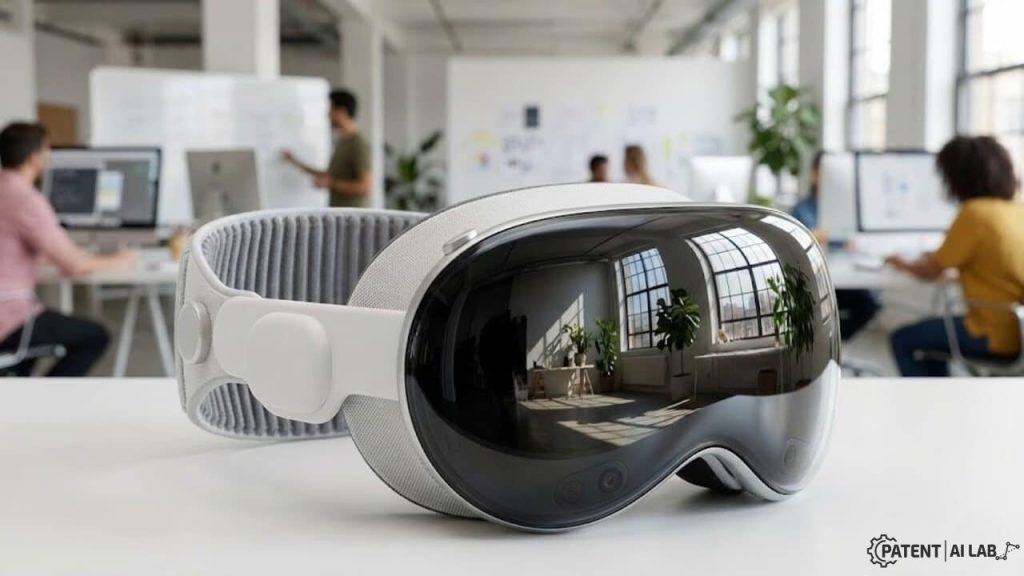
It isn’t just about one device, which is something a lot of people don’t get. It’s about an entire product line.
A lot of the new patents are not for a new Vision Pro model. Instead, they are for smart glasses, mixed-reality spectacles, or lighter headsets. That suggests Apple could be preparing to release a range of products, from high-end XR headsets to regular AR glasses. If that happens, the Vision Pro you know will no longer be a one-of-a-kind gadget but rather the base of an ecosystem.
Is Your Spatial Computing IP Secure?
While Apple heavily patents its XR hardware, the underlying software ecosystem relies deeply on machine learning. If you are a founder building spatial computing applications, securing your software IP is critical. Learn how to avoid the “abstract idea” trap and draft enforceable claims.
Read the AI Patent Success Rate 2026 Audit →Podcast
This automated audio brief outlines the primary data, analysis, and strategic insights covered in this guide.
FAQ
What does Apple’s new VR patent reveal?
Lighter hardware, improved comfort, and new interaction ideas that could shape the next Vision Pro or future AR glasses.
Is this Vision Pro patent linked to a new model?
Not confirmed. Apple often patents things years before they actually come out, but these features are just what a second-gen device might need.
Will everyday users be able to use these tools soon?
Within the next one or two product cycles, depending on technical complexity.
Sources and Legal References
The data presented in this analysis is derived from official patent databases and industry reports. You may verify specific patent filings and technical capabilities via the following resources:
-
1. Industry Report: Virtual Paper for Vision Pro
Details Apple’s intellectual property filing for manipulable digital environments and spatial computing overlays.
Read Full Report on AppleWorld -
2. Industry Report: Vision Pro & Apple Watch Integration
Analysis of Apple’s patent for cross-device biometric feedback and XR interface control.
View Integration Details -
3. Technical Analysis: Holographic Video Sessions
Exploration of the granted patent detailing 3D video conferencing capabilities within the Apple XR ecosystem.
Read Analysis on MacTech -
4. USPTO Public Patent Search (Apple Inc. Assignee Data)
The official United States Patent and Trademark Office database used to verify Apple’s recent AR/VR wearable patent filings.
Access USPTO Database
Disclaimer & Legal Notice
PatentAILab is an independent educational research platform and is not a licensed law firm or financial advisory service. The data, patent analysis, and strategic insights provided in this article are for informational and educational purposes only and do not constitute legal, investment, or business advice. Intellectual property outcomes depend on specific technical facts, jurisdictional laws, and drafting execution. Always consult a certified patent attorney and a qualified financial advisor before making IP filing or venture capital investment decisions.





3 comments