


 Golam Rabiul Alam, PhD
Evaluating PatSnap pricing against Clarivate (Derwent Innovation) deployment costs dictates the operational efficiency of corporate legal and R&D frameworks. Selecting an Intellectual Property (IP) analytics platform requires analyzing structural data architecture rather than baseline interface designs. Misallocating capital in this software tier creates systemic workflow friction.
At A Glance
When justifying PatSnap pricing within the comparative framework against Clarivate, optimal resource allocation depends on your organization’s specific operational mandate. Capital deployment in this software tier creates structural workflow friction if data precision does not match departmental requirements.
Core Value Triggers (2026 Procurement)
- R&D Mandate: PatSnap optimizes discovery workflows for business units, utilizing advanced conversational AI (Eureka) to accelerate market scanning velocity.
- Legal Defensibility: Clarivate (Derwent Innovation) serves legal counsel and prosecution teams due to human-curated data precision (DWPI) and courtroom defensibility.
- Strategic Limitations: Clarivate remains inefficient for rapid innovation scouting, while PatSnap lacks the deep historical data lineage required for high-stakes invalidity litigation.
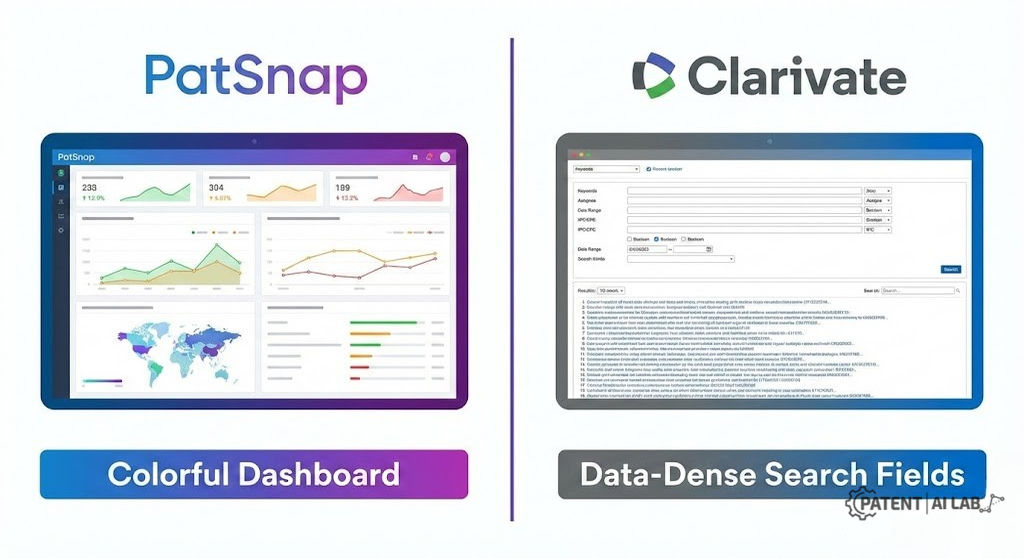
The real question driving software procurement isn’t about baseline features. It’s “Fit.”
Most buyers compare dashboards, patent counts, or AI claims. That’s the wrong lens. The right question is simple: Which tool helps you make better decisions faster, with less internal friction? Because ROI in IP software is not about how much data you get. It’s about how much confusion you remove.
PatSnap: Semantic Indexing and Discovery Velocity
Beyond the flexibility of initial PatSnap pricing tiers, the platform accelerates discovery velocity when you need answers quickly without requiring a PhD in patent law. This architecture targets startups, scaleups, corporate innovation teams, and R&D leaders.
Verified Functional Strengths
Agentic AI Architecture
The 2026 ‘Eureka’ platform integration deploys domain-specific large language models, translating natural language queries into structured patent hits without manual search-string synthesis.
Cross-Functional Visualizations
Technology landscape mapping abstracts complex filing matrices into digestible visual frameworks optimized for corporate strategy directors, technology officers, and cross-functional stakeholders.
Cross-Domain Data Integration
The platform links core patent registries directly with global clinical trial databases, corporate regulatory news, and non-patent scientific literature to map complete technology lifecycles.
In terms of registry depth, PatSnap’s 2026 framework processes over 180 million patents and global non-patent literature sources. This data volume relies on automated machine learning to index complex chemical structures and structural engineering schematics, reducing reliance on manual query logic.
Operational procurement data demonstrates that R&D units systematically reduce competitive intelligence cycles by multiple weeks. This efficiency gain occurs because the interface maps white-space patterns directly, removing the traditional requirement for custom Boolean syntax.
Operational Limitations
Legal-Grade Precision
While automated indexing accelerates discovery, downstream citation analysis occasionally lacks the human-curated data cleaning standards established by Clarivate’s Derwent World Patents Index (DWPI).
Prosecution Workflow Alignment
For continuous patent prosecution workflows at the USPTO, the analytical interface focuses heavily on macro-level strategy rather than the granular legal syntax required to navigate office action rejections.
Verified Structural Strengths
Data Precision Metrics
Proprietary DWPI indexing codes isolate specific chemical compounds and complex engineering mechanisms, securing comprehensive recall even when original applications employ non-standard or obfuscated terminology.
Litigation Defensibility
For invalidity opinions destined for formal judicial scrutiny, the platform provides verified data lineage and historical curation necessary to withstand technical cross-examination in court.
Operational Limitations
Steep Operational Threshold
The analytical interface demands specialized administrative training and extended onboard orientation, introducing significant friction for casual or occasional users.
Structural Underutilization Risk
Deploying this infrastructure to non-legal cross-functional units or general marketing departments frequently results in minimal utilization, systematically degrading the initial capital efficiency allocation.
Clarivate: Human-Curated Lineage and Litigation Precision
Clarivate, specifically the Derwent Innovation platform, targets dedicated intellectual property professionals, including corporate IP counsel, patent attorneys, and institutional licensing teams managing high-value portfolios.
The core architecture relies on the Derwent World Patents Index (DWPI). Rather than aggregating raw public registry feeds, human subject-matter experts manually analyze, rewrite, and classify abstract data to rectify filing ambiguities and standardize corporate entity naming conventions.
Operational Limitations
Legal-Grade Precision
While automated indexing accelerates discovery, downstream citation analysis occasionally lacks the human-curated data cleaning standards established by Clarivate’s Derwent World Patents Index (DWPI).
Prosecution Workflow Alignment
For continuous patent prosecution workflows at the USPTO, the analytical interface focuses heavily on macro-level strategy rather than the granular legal syntax required to navigate office action rejections.
Verified Structural Strengths
Data Precision Metrics
Proprietary DWPI indexing codes isolate specific chemical compounds and complex engineering mechanisms, securing comprehensive recall even when original applications employ non-standard or obfuscated terminology.
Litigation Defensibility
For invalidity opinions destined for formal judicial scrutiny, the platform provides verified data lineage and historical curation necessary to withstand technical cross-examination in court.
Operational Limitations
Steep Operational Threshold
The analytical interface demands specialized administrative training and extended onboard orientation, introducing significant friction for casual or occasional users.
Structural Underutilization Risk
Deploying this infrastructure to non-legal cross-functional units or general marketing departments frequently results in minimal utilization, systematically degrading the initial capital efficiency allocation.
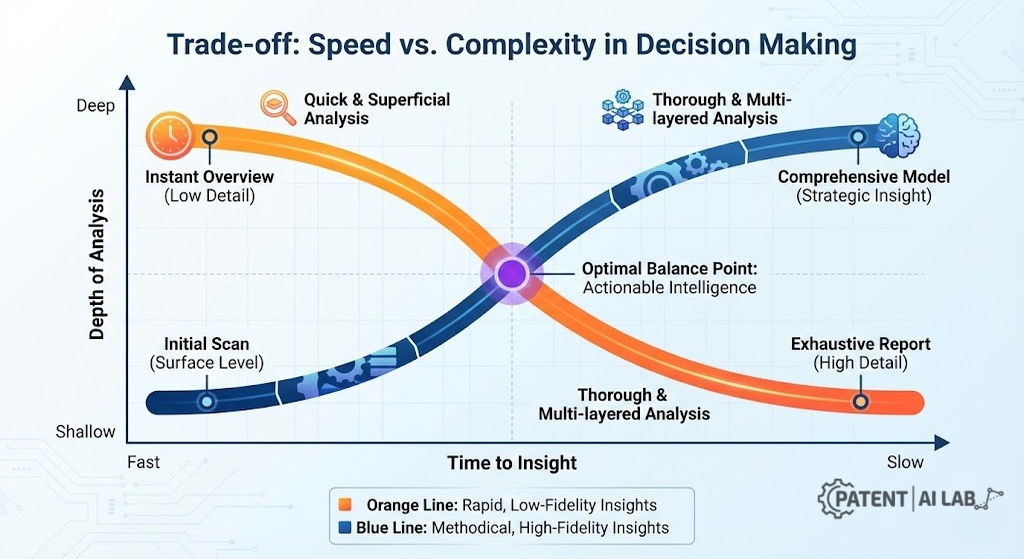
PatSnap Pricing Reality Check
Determining exact PatSnap pricing involves navigating opaque, quote-driven fee structures. Based on verified corporate procurement data, institutional user reports, and mid-market licensing agreements validated in 2026, the following matrix estimates the baseline annual cost structure.
PatSnap (Discovery)
PatSnap (Intelligence)
Clarivate (Derwent)
Side-by-Side Comparison (2026 Framework)
PatSnap (Eureka/Analytics)
Innovation, R&D Strategy, and scouting frameworks.
Clarivate (Derwent Innovation)
Legal Opinions, formal patent prosecution, and Freedom to Operate (FTO).
PatSnap (Eureka/Analytics)
AI deployment synchronized with connected global market data feeds.
Clarivate (Derwent Innovation)
DWPI manually rewritten, corrected, and classified expert abstracts.
PatSnap (Eureka/Analytics)
Accelerated organizational orientation completed within days.
Clarivate (Derwent Innovation)
Extended specialized technical training required across multiple weeks.
PatSnap (Eureka/Analytics)
Near real-time data processing completed within minutes.
Clarivate (Derwent Innovation)
Longitudinal framework resulting in slower but deeper legal analysis.
PatSnap (Eureka/Analytics)
Chief Technology Officers, R&D leaders, and business development execution units.
Clarivate (Derwent Innovation)
In-house IP counsel, corporate patent attorneys, and specialized legal teams.
PatSnap (Eureka/Analytics)
Outgrowing core automated functional capabilities during deep legal challenges.
Clarivate (Derwent Innovation)
Underutilizing complex data features structurally across casual departments.
While PatSnap and Clarivate control the enterprise tier, scaling technology teams frequently evaluate secondary alternatives within the 2026 landscape. High-volume patent prosecution teams often cross-examine these tools against LexisNexis TotalPatent One for baseline corporate litigation searches, or deploy Questel Orbit when prioritizing specialized European and Asian engineering hardware registries. Selecting between these ecosystems depends on whether your organization requires automated AI semantic indexing or manual, human-curated data lineages.
Strategic ROI Assessment Framework
The current market architecture dictates two definitive software deployment paths based on organizational scale and operational mandates:
Procurement Action Framework
For R&D and Strategy Units
- Accelerate Discovery VelocityDeploy PatSnap to streamline whitespace mapping and cross-functional market analysis across decentralized business divisions via flexible PatSnap pricing structures.
- Democratize Data AccessUtilize automated conversational AI (Eureka to ensure non-legal stakeholders can evaluate technology landscapes without continuous attorney oversight.
For Corporate IP Counsel
- Secure Legal-Grade PrecisionRestrict high-stakes invalidity litigation opinions and continuous USPTO patent prosecution workflows to Clarivate’s manually curated data architecture.
- Mitigate Structural LiabilityRely on the verified lineage of the Derwent World Patents Index (DWPI) where undetected prior art risks catastrophic cross-border corporate lawsuits.
Operational metrics confirm that platform ROI depends entirely on organizational fit rather than baseline feature volume. Long-term strategic advantage belongs to procurement teams that resolve operational ambiguity and audit concrete data mandates prior to executing multi-year vendor licensing agreements.
Evaluate alternative decentralized intelligence applications:
Analyze Top 5 AI Prior Art ToolsPodcast
Note: This audio is a condensed summary. Please refer to the written text for precise legal and compliance definitions.
FAQ: PatSnap vs. Clarivate
Is PatSnap data as accurate as Clarivate?
In 95% of business use cases, the answer is yes. PatSnap uses global data from official patent offices. However, for Chemical and Biological sequences, Clarivate’s manual indexing is still superior to PatSnap’s AI automation. Additionally, Clarivate’s “Derwent” data includes manually rewritten abstracts and codes that correct errors and standardizing naming conventions, giving it a slight edge in “recall” (finding hidden patents) for deep legal searches.
Can I use PatSnap for Freedom to Operate (FTO)?
Yes, many companies do for preliminary scouting. However, final FTO opinions—the ones you bet the company on—must be signed off by a registered patent attorney, who often double-checks the data in Clarivate.
What is the exact PatSnap pricing compared to Clarivate in 2026?
Pricing is opaque and quote-based, but expect to pay between $15,000 and $40,000+ per year for a standard corporate license, depending on seat count and modules (e.g., adding Bio/Chemical search or AI modules).
Sources and Legal References
The platform specifications, proprietary data curation parameters, and comparative evaluation metrics cited throughout this analysis are sourced directly from official corporate documentation and verified intellectual property intelligence frameworks:
-
1. PatSnap Innovation Intelligence Framework
Official corporate registry metadata tracking conversational semantic search architecture specifications, registry volume depth, and the 2026 Eureka system updates.
Access Official PatSnap Intelligence Repository -
2. Clarivate Derwent World Patents Index (DWPI)
Proprietary data architecture documentation outlining expert manual indexing parameters, error correction standards, and classified abstract protocols utilized for deep legal searches.
Review Live Clarivate DWPI Curation Parameters -
3. Clarivate Derwent Patent Search Architecture
Enterprise system parameters validating technical litigation defensibility lineages, freedom-to-operate (FTO) processing, and historical database coverage metrics.
Verify Clarivate Derwent System Specifications
Disclaimer & Legal Notice
PatentAILab is an independent educational research platform and is not a licensed law firm or financial advisory service. The data, patent analysis, and strategic insights provided in this article are for informational and educational purposes only and do not constitute legal, investment, or business advice. Intellectual property outcomes depend on specific technical facts, jurisdictional laws, and drafting execution. Always consult a certified patent attorney and a qualified financial advisor before making IP filing or venture capital investment decisions.



Add comment