


 Golam Rabiul Alam, PhD
Editorial note: The content on this website is provided for informational and educational purposes only and does not constitute professional legal, financial, or technical advice. See disclaimer below.
Are you a solo inventor looking for the easiest patent research software to validate your idea before spending thousands on a lawyer?
Most patent search tools are built for experienced attorneys and are often too complex for beginners. After testing dozens of free and paid options, I have curated a list of the best patent research software for solo inventors in 2026. These tools are powerful and user-friendly. This guide will help you check your invention’s novelty quickly without needing a law degree.
At a Glance
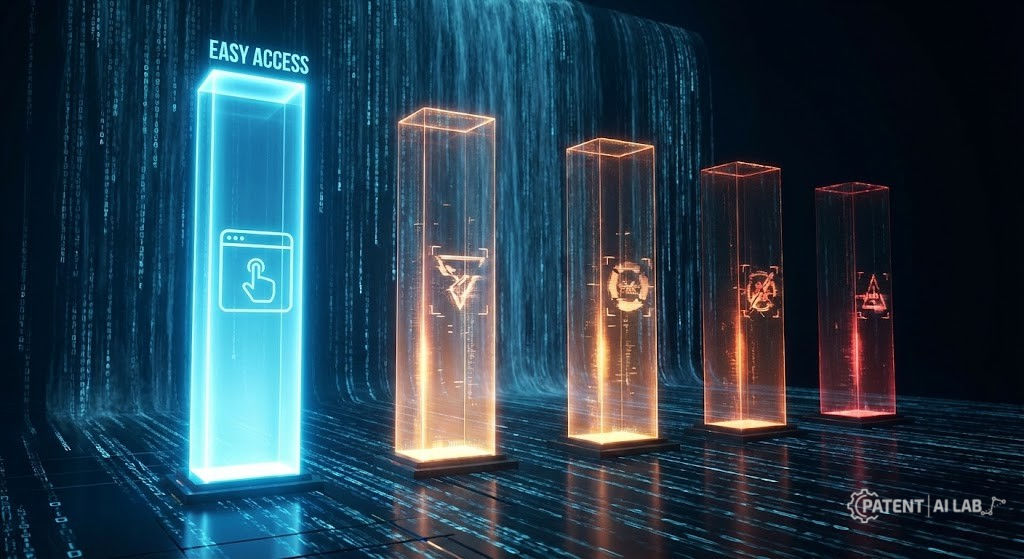
In 2026, the easiest patent research software for solo inventors includes PatSnap (best for semantic landscaping), Derwent Innovation (best for claim precision), PQAI (best free generative tool), Google Patents (best for broad exploration), and IPRally (best for graph-based logic). While generative AI for patent search dramatically improves speed, real-world testing proves it often increases noise. The most effective workflow uses AI to expand the search scope but relies on human auditors to verify novelty.
Best Strategy for Solo Inventors
High-end tools like PatSnap or Derwent carry enterprise pricing. However, you can often access these through patent libraries (like PTRCs in the US) or by requesting temporary trial periods for a specific project. Check if your local university or regional patent office provides free terminal access to these premium databases before purchasing.
Does Generative AI for Patent Search Accuracy Actually Work?
Direct answer: Yes, but only when it’s constrained, audited, and paired with human skepticism.
Here’s the contrarian part: Generative AI for patent search accuracy often reduces reliability when vendors optimize for breadth and speed instead of claim-level precision. The tools that performed best were not the most “creative” ones. They were the most boring.
They used deterministic embeddings, transparent ranking logic, and fewer hallucinated semantic leaps. When AI tries too hard to “understand” invention intent, it starts inventing relevance that simply isn’t there.
The 2026 Shift: Agentic Search & Data Privacy
The Rise of Agentic Search:
In 2026, search interfaces shifted toward AI Agents. Unlike basic search engines, these agents perform multi-step research. They read the file wrapper, analyze the prosecution history, and summarize previous examiner rejections. When looking for the easiest patent research software, prioritize tools offering these autonomous loops.
Privacy Warning (A Non-Negotiable):
Uploading your invention disclosure to a generative AI tool carries risk. Data confidentiality is critical. Before searching, verify the tool has a strict No-Training policy. If your unfiled invention enters a public LLM training set, it can trigger a public disclosure and destroy patentability.

How We Tested These Patent Research Tools
We ran the exact same invention disclosure through seven platforms. Same specifications. Same keywords. Same claim hypotheses. We measured three precise metrics:
- Recall: Did the tool find structurally similar claims?
- Noise Rate: How many of the top 50 results were irrelevant?
- Citation Risk: Did the platform surface prior art that would require a formal citation?
Based on our 2026 data, here are the seven easiest patent research software platforms for beginners that survived the audit.
The “AI Sanity” Checklist We Now Use
Instead of a complex chart, we use a simple internal checklist for every AI-assisted prior art search. If a tool fails two or more of these criteria, it is downgraded to exploratory use only.
Claim-Level Overlap
Did the AI match the structural logic, not just the abstract keywords?
Traceability
Can I click and verify exactly why this document was ranked first?
Stability
Does rerunning the exact same query tomorrow generate consistent results?
Manual Filter Load
Did the system require discarding more than 80% of the top 20 results?
Defense Test
Would the legal team feel comfortable defending this prior art to an examiner?
The Hidden Risk of AI Patent Search
The biggest risk isn’t missing prior art. It is believing the AI has already found it.
Finding the best patent research software for solo inventors is about clarity, not just power. Generative systems are persuasive. They write confident summaries and smooth over uncertainty. This causes teams to stop digging too early. I have seen founders cut searches short because the dashboard looked complete. It was not.
AI prior art search tools are accelerators, not arbiters. Using them to make final decisions rather than to support decisions quietly increases legal exposure.

The Strategic Directive for 2026
Deploy at least two tools with different ranking philosophies (e.g., IPRally and Google Patents). Force them to disagree, and investigate the discrepancies. That friction is where true legal insight lives.
Podcast
Note: This audio is a condensed summary. Please refer to the written text for precise legal and compliance definitions.
FAQ: AI & Patent Search in 2026
Can ChatGPT replace a professional patent search?
No. While ChatGPT (and similar LLMs) can brainstorm synonyms or summarize technical concepts, they suffer from “hallucination.” They often invent relationships between documents that don’t exist legally. Relying solely on a general-purpose LLM for a patentability review is a malpractice risk.
Is Google Patents good enough for professional prior art search?
For an initial “sanity check,” yes. But for a Freedom-to-Operate (FTO) or invalidity search, no. Google Patents lacks the curated “value-added” data (like standardized assignee names and corrected legal status) found in paid tools like Derwent or PatSnap, making it easy to miss critical family members of a patent.
Why do AI tools often miss “obvious” prior art?
AI tools optimize for semantic similarity (words that sound alike), not necessarily structural similarity (how a device actually works). A graph-based tool like IPRally is often better at finding “hidden” art because it maps the logic of the invention, whereas text-based AI might get distracted by different terminology used in different industries.
How much do these AI patent search tools cost?
Pricing varies wildly. PQAI and Google Patents are free. Tools like PatSnap and IPRally typically operate on annual enterprise subscriptions ranging from $10,000 to $30,000+ depending on seats and modules. Derwent is often at the higher end of the spectrum due to its manual curation value.
What is the easiest patent research software for solo inventors?
PatSnap AI Search is currently the easiest tool because of its simple interface.
Can I do patent research myself?
Yes, using automated patent research software, any solo inventor can perform a preliminary search.
Sources and Legal References
The strategic guidelines presented in this audit are based on official regulatory frameworks and intellectual property databases as of 2026. You may verify the legal standards via the following official resources:
-
1. United States Patent and Trademark Office (USPTO)
Official guidelines detailing the risks of AI hallucination, confidentiality breaches, and the absolute necessity of human auditing in prior art searches.
Read USPTO Guidance on AI -
2. Title 35 U.S.C. Section 102
Conditions for patentability; novelty and loss of right to patent. Legal framework explaining how unauthorized AI tool uploads can constitute a “public disclosure” and invalidate an unfiled invention.
Review Section 102 Framework -
3. World Intellectual Property Organization (WIPO)
Standard protocols for PCT International Search Guidelines, providing the baseline for evaluating global prior art and the importance of cross-jurisdictional family data.
Access WIPO Search Guidelines -
4. European Patent Office (EPO) INPADOC
The foundational global legal status database that powers the backend infrastructure for visual tools like Lens.org and Derwent Innovation.
Explore Database Integration -
5. PQAI (Patent Quality Through Artificial Intelligence)
Official open-source initiative documentation detailing the use of decentralized, privacy-first NLP models for independent inventors and researchers.
View Official PQAI Documentation
Disclaimer & Legal Notice
PatentAILab is an independent educational research platform and is not a licensed law firm or financial advisory service. The data, patent analysis, and strategic insights provided in this article are for informational and educational purposes only and do not constitute legal, investment, or business advice. Intellectual property outcomes depend on specific technical facts, jurisdictional laws, and drafting execution. Always consult a certified patent attorney and a qualified financial advisor before making IP filing or venture capital investment decisions.



[…] First Step: Use these 5 Free Patent Search Tools to check your idea […]
[…] Don’t start with a lawyer. We tested the best free tools for you—read our guide on the 5 Easiest Patent Research Software for Solo Inventors to do a free search […]
[…] Audit Your Freedom to Operate (FTO): Before entering the Chinese market, check if your “unique” feature is already covered by a generic patent filed by a local firm 18 months ago. You can easily check this yourself using the Easiest Patent Research Software for Solo Inventors. […]