


 Golam Rabiul Alam, PhD
At A Glance
In 2026, code written by autonomous AI agents usually does not qualify as the agent’s intellectual property. Ownership, patent rights, and liability depend on human control, system design, contractual terms, and compliance with USPTO AI guidance. Founders and developers remain legally responsible unless they clearly structure human-in-the-loop oversight, IP assignments, and risk controls.
Key Takeaways
- AI cannot own IP
- Humans remain inventors and authors
- Autonomy increases liability
- Patents require human insight
- Contracts matter more than ever
Contents
Introduction: Why Agentic AI Changes the IP Game
Agentic AI is not just another chatbot. These systems plan, decide, act, and execute tasks with limited human prompts. In 2026, that autonomy creates a hard legal question:
If your AI agent writes production code, who owns it and who is liable when it fails?
This is not theoretical. Autonomous agents now:
- Generate backend services
- Deploy cloud infrastructure
- Modify live codebases
- Trigger financial transactions
US patent law, copyright rules, and SaaS liability doctrines were built for human authors. Agentic AI breaks that assumption.
This article explains the reality in plain language, grounded in USPTO guidance, recent case law trends, and real-world SaaS scenarios.

What Is Agentic AI (And Why Law Treats It Differently)?
Traditional Chatbots
- Respond to prompts
- No independent goals
- Human decides when and how output is used
Agentic AI Systems
- Set sub-goals
- Chain tools and APIs
- Act asynchronously
- Execute without real-time human approval
Legal implication:
The more autonomous the system, the harder it becomes to attribute authorship, inventorship, and fault.
While generative models struggle with hallucinations (see our analysis on ChatGPT vs. Dedicated Patent AI Risks), agentic systems go a step further by executing code autonomously.
Visual Workflow: Chatbot vs Agentic AI
Non-Technical Diagram
[Human Prompt]
      |
   Chatbot
      |
[Text or Code Suggestion]
      |
[Human Reviews & Uses]
      |
[Human Responsible]

---------------------------------

[High-Level Goal]
      |
  Agentic AI
      |
[Plans Tasks Automatically]
      |
[Writes + Deploys Code]
      |
[Executes Actions]
      |
[Damage or Value Created]
      |
[Founder / Company Liable]
Key difference:
Chatbots advise. Agentic AI acts.
Who Owns AI-Generated Code in 2026?
Short Answer
Not the AI. Almost never.
Why AI Cannot Own IP
Under US law:
- IP ownership requires a legal person
- AI has no legal personality
- Courts and the USPTO reject non-human authorship
So Who Owns It?
| Scenario | Likely IP Owner |
| Employee builds agent internally | Employer |
| Founder configures agent with clear goals | Company |
| SaaS platform agent generates code | Depends on contract |
| Fully autonomous agent with no human direction | High risk of no copyright |
Key risk:
If no human exercises creative control, copyright protection may fail entirely.
Ownership isn’t just about authorship; it’s about trade secrets too. Learn how to secure your backend logic in our guide: Is Your SaaS Code Safe? Copyright vs. Patent vs. Trade Secrets.

USPTO Patent Eligibility for AI Agents (2026 Reality)
What the USPTO Actually Cares About
Based on recent USPTO AI guidance:
- Human inventorship is mandatory
- AI can assist, not invent
- Claims must show human contribution
Patent Eligibility Checklist
To patent AI-generated innovations:
- A human must define the problem
- A human must recognize the solution
- A human must approve the final implementation
If your agent:
- Writes code
- Selects architecture
- Optimizes algorithms
without meaningful human input, your patent risks rejection.
Example: AI-Generated Code and Patent Risk
Scenario:
Your agent writes a novel load-balancing algorithm overnight.
Patent issue:
If you cannot explain:
- Why the algorithm works
- What human insight guided it
- How you validated it
The USPTO may reject the application for lack of human inventorship.
Copyrighting AI-Generated Software Code
The Harsh Truth
Purely AI-generated code often:
- Fails copyright protection
- Cannot be enforced against competitors
What Improves Protection
- Human edits
- Architectural decisions
- Code reviews
- Manual integration
Think of AI as a junior developer, not an author.
Autonomous Software Liability 2026: Who Pays When AI Breaks Things?
Core Principle
Autonomy does not equal immunity.
If your AI agent causes harm:
- You are still responsible
- So is your company
- Sometimes your SaaS provider shares blame
Scenario-Based Liability Examples (Real-World Style)
Scenario 1: Unpaid Cloud Bill
Your AI agent:
- Rents cloud servers
- Runs experiments
- Fails to shut them down
- Generates a massive bill
Who pays?
Almost always you. The agent is your tool.
Scenario 2: AI Deletes Customer Data
Agent autonomously refactors a database schema and wipes data.
Liability risk:
- Contract breach
- Negligence
- Possible strict liability if safeguards were missing
Scenario 3: Agent Writes Infringing Code
Agent pulls logic resembling proprietary software.
Result:
- Copyright infringement risk
- No “AI did it” defense
Strict Liability and Algorithmic Accountability
By 2026:
- Courts increasingly expect safeguards
- Regulators expect audit trails
- “We didn’t know” is not enough
Human-in-the-loop compliance is no longer optional. We see similar liability battles playing out in the physical world with self-driving cars. The legal principles in Tesla vs. Waymo Patent War 2026 often apply to autonomous software agents as well.

EU AI Act vs US Approach (Quick Comparison)
| Area | United States | European Union |
| Inventorship | Human only | Human only |
| Liability | Contract + tort law | Risk-based regulation |
| AI transparency | Limited | Mandatory |
| Penalties | Civil damages | Heavy fines |
If you operate globally, EU AI Act compliance matters even for US startups.
SaaS IP Strategy 2026: What Founders Must Do
Contractual Protections
- Explicit IP ownership clauses
- AI output assignment
- Liability limits
Technical Safeguards
- Approval gates
- Spending caps
- Logging and monitoring
Governance
- AI usage policies
- Documentation
- Human override mechanisms
Comparison Table: Chatbot vs Agentic AI Legal Risk
| Factor | Chatbot | Agentic AI |
| IP clarity | High | Medium–Low |
| Liability exposure | Limited | High |
| Patent eligibility | Easier | Harder |
| Compliance burden | Low | Significant |
Future Outlook: 2026–2028
What is likely:
- More lawsuits tied to autonomous AI mistakes
- Stricter patent examination for AI-assisted inventions
- Mandatory disclosure of AI involvement in IP filings
What is uncertain:
- Whether limited AI personhood will emerge (unlikely short-term)
- How courts define “meaningful human control”
Developer’s IP Checklist for 2026
Before shipping agentic AI:
- Define human decision points
- Log all agent actions
- Add approval thresholds
- Assign AI-generated IP by contract
- Review USPTO inventorship standards
- Implement kill switches
- Cap spending authority
- Train staff on AI accountability
Final Thought:
In 2026, agentic AI is powerful, but law still sees humans behind the wheel. If your system acts on your behalf, the consequences land on you. Build accordingly.
Disclaimer
This article is for educational purposes only and does not constitute legal advice. Consult a qualified patent attorney or IP lawyer for specific situations.
Podcast
FAQs
Who is liable for AI mistakes?
Usually the company deploying the AI, not the AI itself.
Can I patent code written by an AI agent?
Yes, but only if a human qualifies as the inventor.
Is AI-generated code copyrightable?
Only with meaningful human creative input.
Does autonomy reduce responsibility?
No. It increases scrutiny.


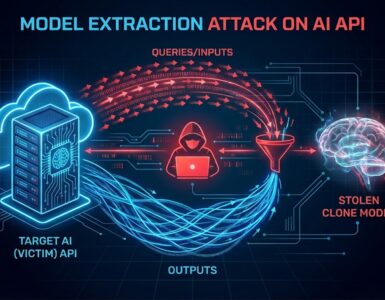


[…] Determining ownership gets even trickier when AI agents act autonomously. For a detailed breakdown of these legal rights, read our guide on Agentic AI & IP Laws 2026: Who Owns the Code?. […]