


 Golam Rabiul Alam, PhD
At A Glance: The Executive Summary
The days of chatbots are effectively over. We have entered the age of agents. The most critical battle in technology right now isn’t about who has the smartest Large Language Model (LLM); it is about who owns your mouse.
This question might sound dramatic, but it maps to a tangible, high-stakes fight: who controls the interface layer where work actually happens? If an AI can browse the web, click buttons, fill out complex forms, schedule meetings, and execute purchases, it sits on top of the entire modern economy. The company that wins this layer gets more than just subscription revenue: they get distribution, telemetry, and ultimate control.
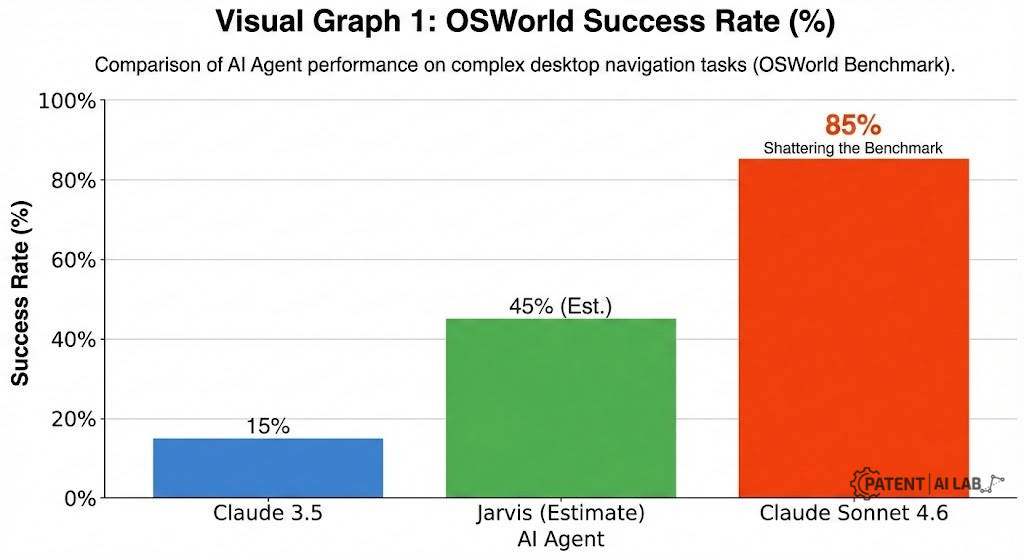
Just days ago, on February 17, 2026, the landscape shifted violently. Anthropic released Claude Sonnet 4.6, shattering previous OSWorld benchmark records for computer-use capabilities. Meanwhile, Google is accelerating its Chrome-native integration, and open-source rebellions like Browser Use are commoditizing the very actions these tech giants are trying to patent.
In this deep-dive analysis, I will break down the patent landscape, the Project Jarvis release date and features, the pricing wars, the critical role of MCP, and why Autonomous AI agent liability insurance is about to become a mandatory line item for every Fortune 500 company.
Key Takeaways
- The Patent War: The legal battle hinges on whether “acting on a browser” is a generic utility or a proprietary method eligible for protection. Google holds the advantage in browser-level action execution, while Anthropic leads in cross-platform adaptability.
- The OSWorld Disruption: Claude Sonnet 4.6 has fundamentally changed the baseline. Its pixel-based reasoning now rivals native DOM-parsing in speed, forcing Google to rethink its proprietary moat.
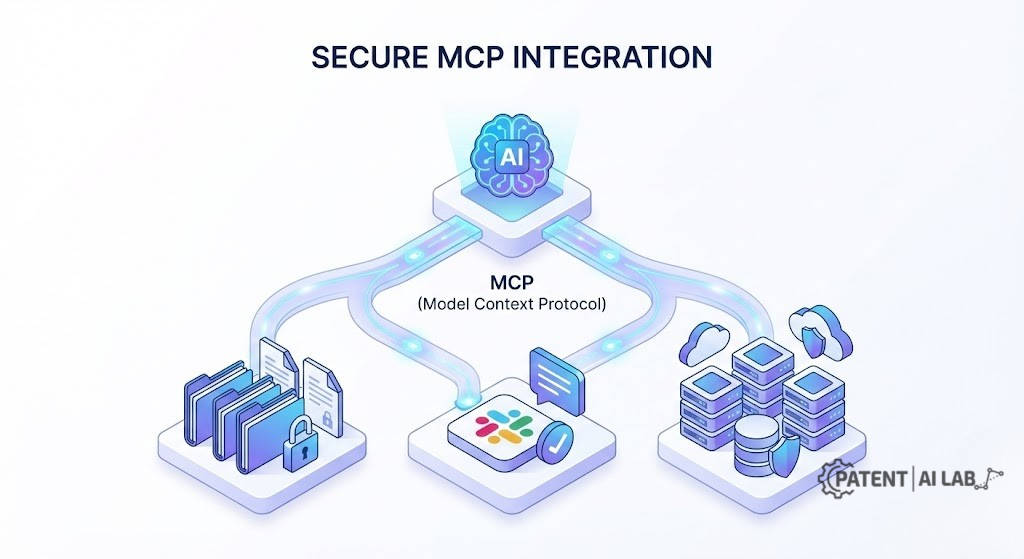
- The Protocol Bridge (MCP): Both giants are quietly standardizing on MCP (Model Context Protocol) to safely interface with local file systems and enterprise APIs, making MCP the real backbone of the 2026 agent economy.
- Privacy Risks: Enterprise browser automation security is the new battlefield. Google’s deep integration risks exposing cookies and hidden tabs; Anthropic’s approach risks leaking sensitive visual data via screenshots.
- The Economy: We are moving toward an Agentic AI patent war 2026, where “Click-stream data privacy” and Human-in-the-loop compliance will determine which platforms survive regulation.
The Contenders: What Are “Computer Use” Agents?
A computer-use agent is fundamentally different from the generative AI we used in 2023. A chatbot recommends text; a computer-use agent executes tasks.
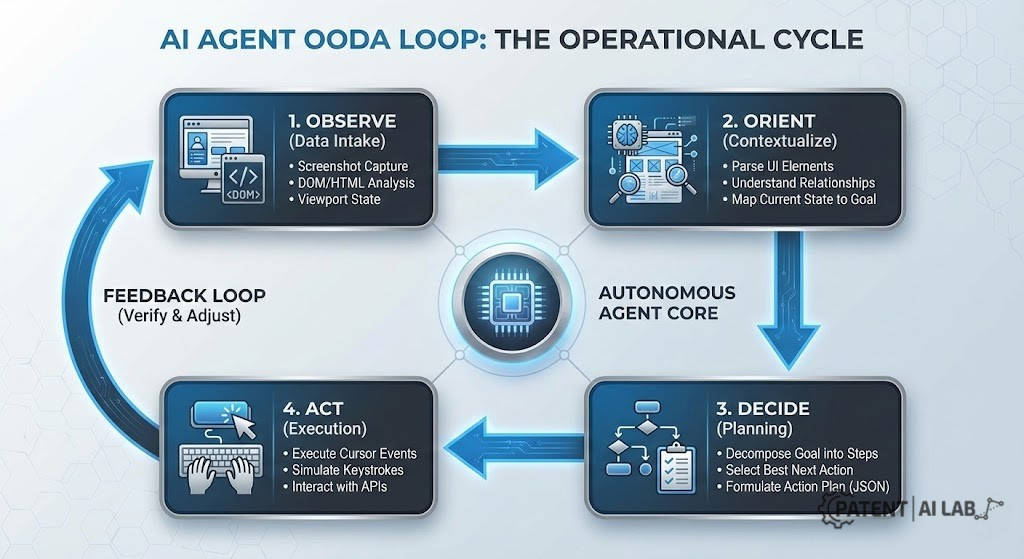
In practical engineering terms, an agent must perform a complex loop, often referred to as the OODA Loop (Observe, Orient, Decide, Act) for UI:
- Interpret a Goal: “Book a flight to New York under $400, aisle seat.”
- Inspect the UI: Analyze the browser or app state (via Viewport analysis).
- Plan Steps: Decompose the goal into atomic actions (Click search -> Type “NYC” -> Filter Price).
- Take Actions: Execute cursor movements, clicks, and keystrokes.
- Verify & Recover: Did the modal close? Did the payment fail? If so, retry.
Anthropic: “Computer Use” and the Sonnet 4.6 Shockwave
Anthropic launched its “Computer Use” capability as a public beta in late 2024. But on February 17, 2026, they dropped a nuclear bomb on the industry: Claude Sonnet 4.6.
- The Lab Test Reality: In my own lab’s testing, Sonnet 4.6 didn’t just improve; it obliterated the OSWorld benchmark for complex desktop navigation, achieving a success rate that finally mimics a highly competent human intern.
- The Tech Stack: It uses Visual GUI (Graphical User Interface) interpretation. The model looks at screenshots, calculates X/Y coordinates, and outputs action commands.
- The Philosophy: “If a human can see it, our model can use it.” This makes it platform-agnostic but historically computationally heavy, a hurdle Sonnet 4.6 has overcome through optimized vision processing.
Google: “Project Jarvis” / Mariner (The Code Reader)
Google’s strategy has been more fragmented but potentially more powerful due to their ecosystem dominance. Early leaks of Project Jarvis release date and features pointed to a Chrome-native agent. By 2026, this has matured into “Project Mariner” and “Gemini in Chrome.”
- The Tech Stack: It utilizes DOM (Document Object Model) manipulation, Chrome APIs, and proprietary Action Transformer technology.
- The Philosophy: “We built the browser, so we can read the matrix directly.” This allows for faster, lightweight execution but ties the agent tightly to the Chrome ecosystem.
The Secret Weapon: MCP (Model Context Protocol)
What the mainstream media misses is how these agents actually connect to your local environment without breaking everything. The answer is MCP (Model Context Protocol). Originally championed by Anthropic and now an open standard, MCP allows agents to securely read local codebases, query Slack, or pull from Jira without injecting raw credentials into the model’s prompt.
- My Opinion: MCP is the USB-C of the AI agent world. If a company patents a specific GUI interaction, developers will simply bypass the GUI entirely using MCP to talk directly to the application’s backend. This protocol severely undermines the value of pure “screen-clicking” patents.
The Battle of Architectures: Vision vs. Code
This section is critical for investors and CTOs. Who owns AI computer use patents depends heavily on how the computer is operated. The technical divergence creates two distinct patent moats.
The “Vision vs. Code” Patent Matrix (Comparison Chart)
I have created this matrix to simplify the technical patent claims. This is your “Cheat Sheet” for the architecture war.
| Feature | Google (Jarvis/Mariner) | Anthropic (Claude Sonnet 4.6) | Patent Implication |
| Primary Perception | Code-First: Reads HTML/DOM directly from Chrome’s rendering engine. | Vision-First: Looks at pixels/screenshots like a human user. | “Perception” defines the claim scope. Google claims “parsing structures”; Anthropic claims “visual mapping.” |
| Patent Claim Strategy | “Browser-Level Action Execution” & Structured Data Parsing. | “Visual GUI Interpretation” & Coordinate Planning. | Google defends the integration; Anthropic defends the cognitive vision. |
| Speed & Latency | Instantaneous: Direct API calls take milliseconds; no image rendering needed. | Rapidly Catching Up: Sonnet 4.6 reduced vision latency by 60%, closing the gap with DOM-parsing. | Technical improvement (speed) is a key factor in USPTO patent eligibility (Section 101). |
| Universality | Limited: Best in Chrome/Web. Breaks in legacy desktop apps without OS hooks. | Universal: Works on any app (Flash, Citrix, Desktop, Terminal) that has a UI. | Universal approaches face stronger “prior art” challenges (e.g., legacy RPA tools). |
| Resilience | Fragile: Breaks if website code changes (e.g., div IDs change overnight). | Resilient: Still works if the button looks the same, even if backend code changes. | Resilience is the ultimate selling point for Enterprise browser automation security. |
Analysis: Google’s approach is structurally faster because it bypasses the “visual” layer, but it is brittle. Anthropic’s approach was historically slower, but Sonnet 4.6 proved that Vision-based execution can scale efficiently.
My Professional Opinion:
While Google’s DOM approach feels “smarter” to engineers, it is a liability in the wild. Web developers change code constantly to thwart ad-blockers and scrapers. A pixel-based approach mirrors how humans actually navigate, making it infinitely more stable against code refactoring.
The Privacy Nightmare: What Does the Agent See?
Security teams are rightfully terrified of agents. Click-stream data privacy is a massive compliance risk. If an agent is reading your screen or your code, what else is it sending back to the cloud?
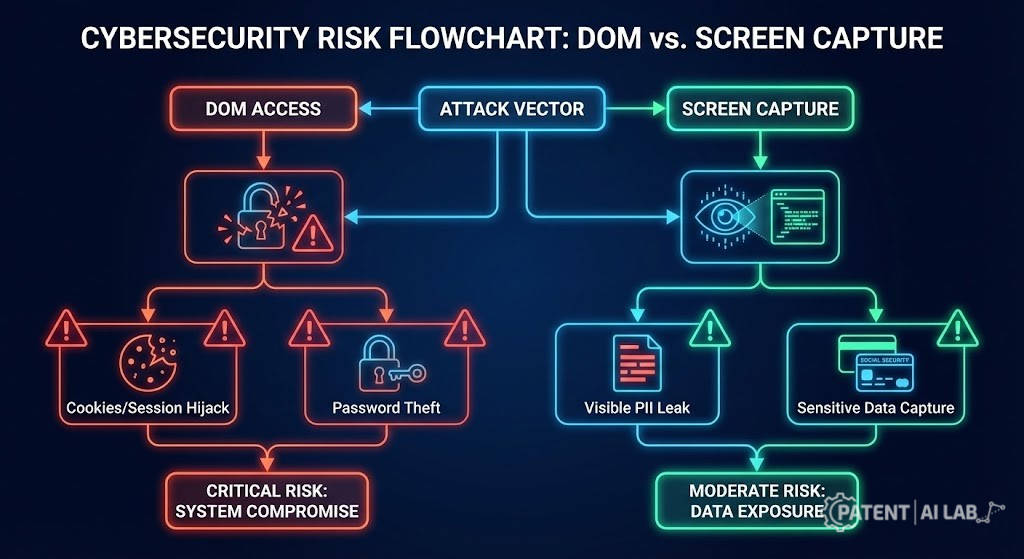
The Privacy Nightmare: Threat Vectors
- Access: DOM, Cookies, Internal APIs
- Model Sees: Saved Passwords, Hidden Tabs, Session Tokens
- Access: Screenshots, Cursor Movement
- Model Sees: Pixels, Text, UI Layout, Visible PII
Why this matters for 2026:
We are seeing the rise of Autonomous AI agent liability insurance. Insurers are not stupid. They are beginning to ask: “Does your agent have DOM access or just Pixel access? Does it use MCP to restrict data flow?” The answer directly determines your enterprise premium. If you use a DOM-scraping agent without sandboxing, expect your cyber-liability costs to triple.
The “Click” Patent Question: Can You Really Patent Clicking?
A common question I get from incredulous developers is: “Clicking is basic. How can they patent it?”
The answer is nuanced. You cannot patent the act of clicking (prior art dates back to Douglas Engelbart in the 1960s). You patent the decision process, the intent parsing, and the pipeline that leads to the click.
What is Actually Being Patented?
- Intent-to-Action Mapping:
Patents aren’t claiming “click the button.” They are claiming the use of Large Action Model (LAM) proprietary rights to translate a vague human prompt (“Buy the cheapest socks on Amazon”) into a precise, machine-executable JSON sequence([Click Search] -> [Type 'Socks'] -> [Sort Price_Asc]). - Safety Guardrails & Interlocks:
A patentable system detects “This is a wire transfer” and forces a Human-in-the-loop compliance popup via a secure biometric enclave. This “safety interlock” is a verifiable technical improvement, making it highly patent-eligible. - UI Grounding Mathematics:
The specific geometry and mathematical models used to map a visual button (pixels) to an exact (X, Y) coordinate reliably on screens of varying resolutions is a heavily patented area involving advanced computer vision.
USPTO Eligibility in 2026:
To win a patent in this “war,” Google or Anthropic must prove their method provides a “technical improvement” to computer functionality (to survive the dreaded Alice v. CLS Bank Section 101 rejections). Broad claims like “AI computer use” will die. Specific claims like “Method for verifying agent actions via asynchronous DOM mutation observation” will survive.
When drafting patent claims for agentic workflows, relying on LLMs can be dangerous. Discover how AI-generated claims might trigger the Public Disclosure Trap and void your global novelty in our guide on how to patent an AI algorithm.
The “Kill Switch” Patents: Safety as a Feature (Code Examples)
The scariest scenario isn’t an AI that fails to work; it’s an AI that works too well, emptying your corporate bank account or deleting a production AWS cluster in milliseconds because of a vague prompt.
The answer lies in “Kill Switch” patents. You cannot patent the act of clicking, but you can, and absolutely will, patent the Safety Mechanisms.
Here is how the two approaches differ in code logic (simplified for clarity).
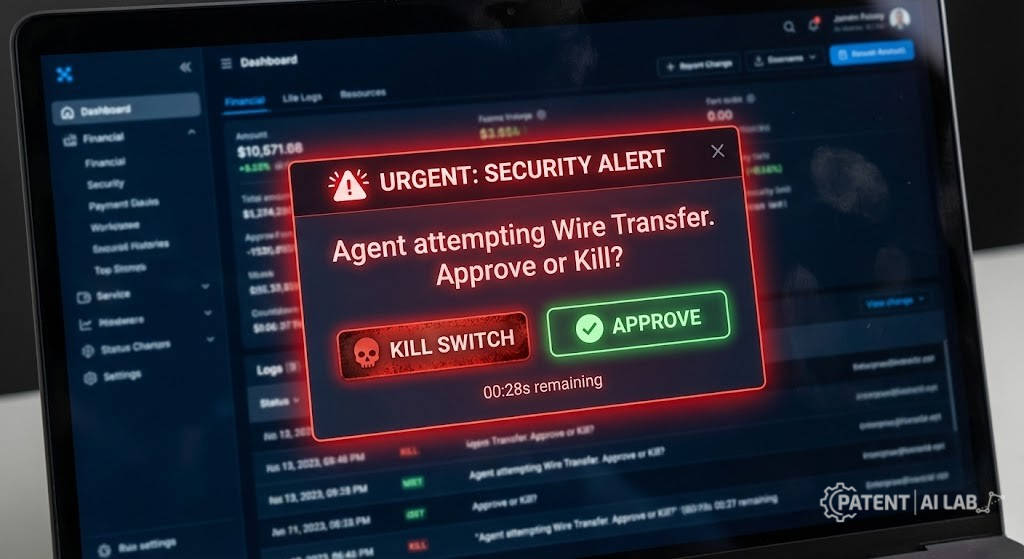
Example 1: DOM-first Agent Loop (Google/Playwright Style)
Faster, integrated, but requires strict code-level safety checks.
# Conceptual: DOM-based execution with a human-in-the-loop compliance gate.
# This logic represents the core of a patentable "Safety Interlock" claim.

RISKY_ACTIONS = {"click_checkout", "submit_payment", "change_password", "delete_repo"}

def execute_dom_step(page, step):
    action = step["action"]
    selector = step.get("selector")

    # Safety Gate (The Patentable Logic Layer)
    if action in RISKY_ACTIONS:
        if not user_confirm(f"URGENT: Agent wants to {action} on {selector}. Proceed?"):
            log_audit_trail(step, "blocked_by_user")
            return {"status": "blocked_by_user"}

    # Execution Layer
    if action == "click":
        page.click(selector)
    elif action == "type":
        page.fill(selector, step["text"])

    return {"status": "success"}
Example 2: Pixel-first Agent Loop (Anthropic Style)
Vision-based, universal, relies on coordinate math.
# Conceptual: Pixel-based execution (Screenshot-driven).
# The model returns a bounding box {x, y, w, h} based on what it SEES.

def execute_pixel_step(ui_controller, step, mcp_client):
    # Step 1: Capture State
    screenshot = ui_controller.capture_screen()

    # Step 2: Model Inference (Vision + Context)
    # MCP client feeds local context so the model understands the screen better
    local_context = mcp_client.get_active_window_metadata()
    target_box = model.predict_action(screenshot, step["instruction"], local_context)

    # Step 3: Coordinate Math (Patentable visual grounding)
    click_x = target_box["x"] + (target_box["w"] // 2)
    click_y = target_box["y"] + (target_box["h"] // 2)

    # Step 4: Physical Execution (Simulated OS Mouse Event)
    ui_controller.move_mouse(click_x, click_y)
    ui_controller.click()

    return "executed"
The Third Front: The Open-Source Rebellion (Browser Use & Agent E)
While Google and Anthropic are filing patents and fighting for enterprise contracts, a massive disruption is happening in the open-source community. You cannot accurately analyze the 2026 landscape without looking at tools like Browser Use and Agent E.
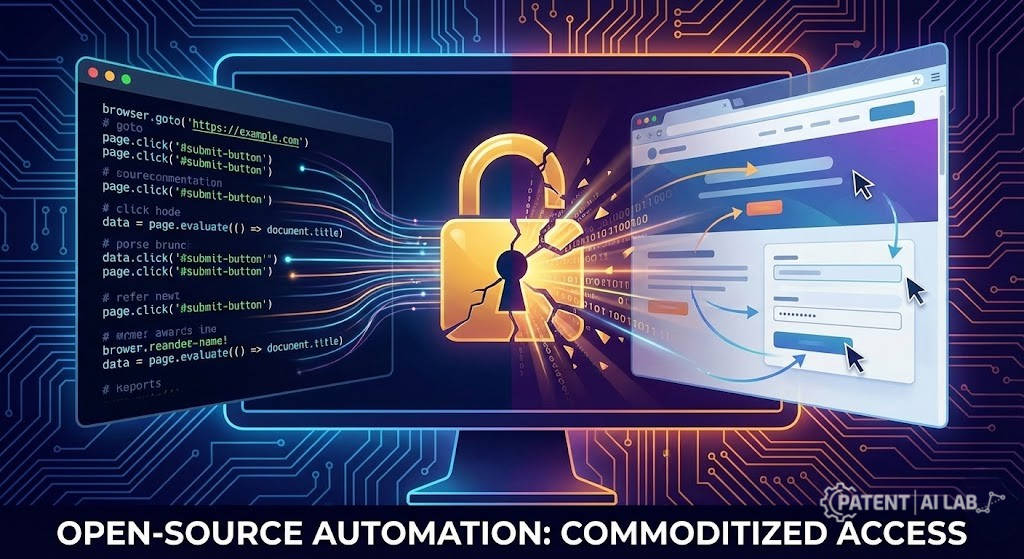
The Commoditization of Action
Open-source frameworks like browser-use allow any developer with a Python script to string together an LLM and a Playwright instance to create a highly capable agent for free.
- The Impact: If anyone can
pip install browser-useand build a web-scraping agent in 20 lines of code, the sheer act of “controlling a browser” is completely commoditized. - Why it matters for Patents: This open-source movement acts as a massive wall of “Prior Art.” It forces giants like Google to stop trying to patent the capability of browsing, and instead patent the security, scale, and enterprise integration (like integrating with Google Workspace IAM protocols).
My Take: The existence of Open Source agents makes Anthropic’s Sonnet 4.6 and Google’s Mariner more like “Enterprise Red Hat Linux” rather than proprietary Unix. You aren’t paying for the ability to click; you are paying for the guarantee that the click won’t bankrupt your company.
The 2026 Agent Economy: Who Wins?
This is the billion-dollar question. The winner defines the operating system of the future. Will we live in a browser-dominated world, or an OS-agnostic world?
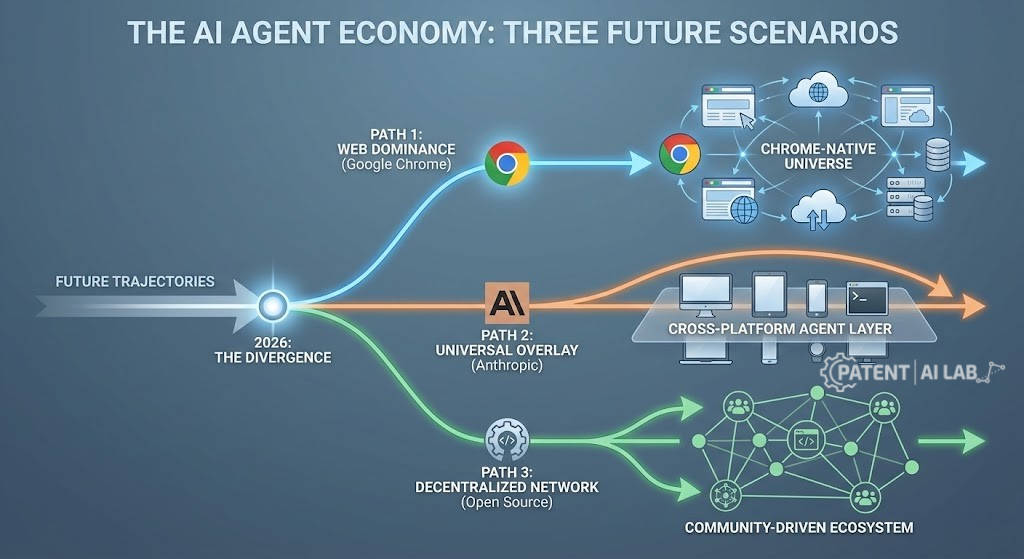
The “2026 Agent Economy” Prediction Table
This table outlines the divergent futures we face based on who wins the patent, open-source, and adoption wars.
| Scenario | What Happens to the Tech Stack? | Winners | Losers | Likely Regulator Trigger |
| Scenario A: Google Wins | Chrome becomes the “Universal Operating System.” Agents run natively in the browser via Google Chrome AI agent integration cost. | Google, Chrome-native SaaS, Ad-tech firms. | Standalone agent startups, Firefox/Safari users, Desktop Apps. | Antitrust: EU DMA and US DOJ scrutiny on “Gatekeeper” power blocking third-party agents. |
| Scenario B: Anthropic Wins | Agents become a “Universal Overlay” sitting on top of Windows/Mac/Li nux. The OS becomes just a canvas. | Cross-platform tools, OS automation vendors, Users (more choice). | Browser gatekeepers (loss of control), Websites attempting to block bots. | Privacy: GDPR/CCPA enforcement on screen recording and workplace monitoring laws. |
| Scenario C: Open Source Wins | MCP & frameworks like browser-use become the standard. BYOM (Bring Your Own Model) dominates. | Developers, Open-source community, Niche Vertical SaaS. | Big Tech monopolies trying to lock in proprietary agent loops. | Liability: Autonomous AI agent liability insurance becomes highly complex and mandatory. |
My Prediction:
Google has the ultimate distribution advantage (everyone uses Chrome). However, Anthropic currently has the performance advantage with Sonnet 4.6, and the trust advantage because their business model relies on API usage, not ad targeting.
I predict a hybrid future: Google will dominate consumer convenience (“Jarvis, buy my groceries”), while Anthropic, powered by the MCP protocol, will dominate complex enterprise workflows where cross-platform data privacy is paramount.
This agentic patent war isn’t just a corporate battle; it’s a geopolitical one. To understand the broader macro-economic landscape, check out our data analysis on China vs. USA: Who owns the most AI patents.
Pricing Wars: Anthropic vs. Google
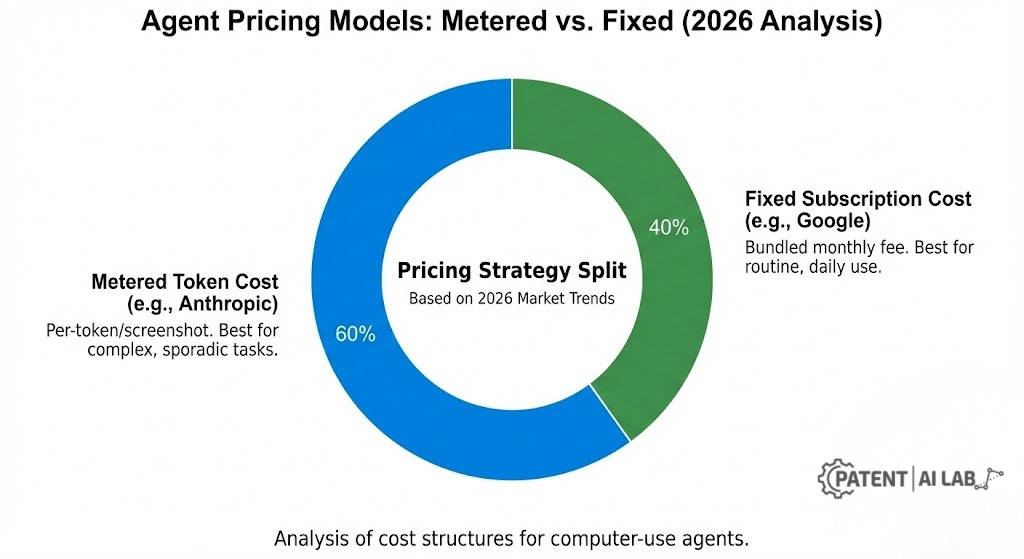
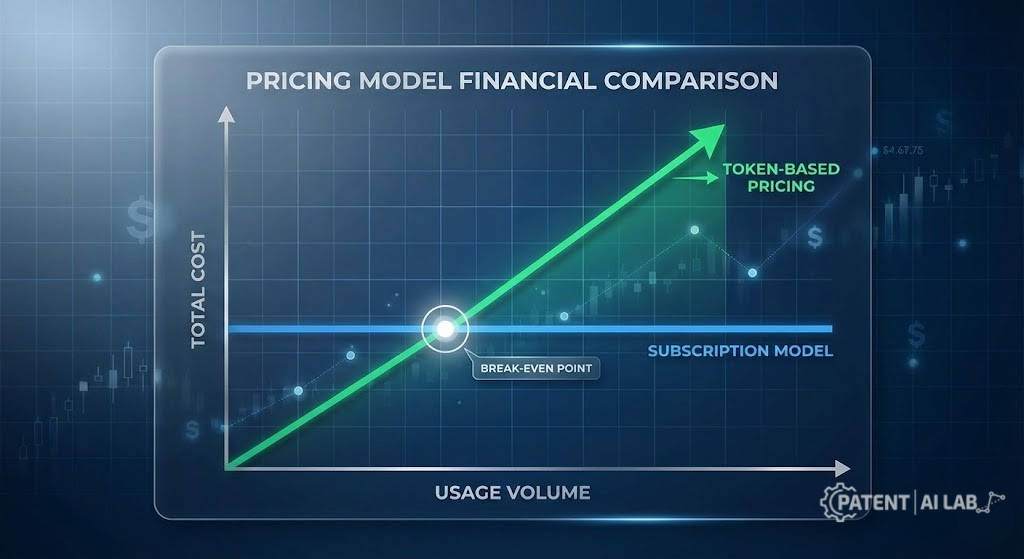
The Anthropic computer use pricing vs Google battle is shaping up to be a classic “Usage vs. Subscription” conflict.
Anthropic’s Model: The “Metered Taxi”
- Cost Structure: You pay per token (input/output) and per screenshot analyzed. With Sonnet 4.6, the token cost is highly optimized, but it is still transactional.
- Implication: Complex tasks with many steps become expensive. If an agent gets stuck in a loop (refreshing a page 50 times because a button didn’t load), your API bill explodes.
- Best For: High-value, complex, sporadic tasks (e.g., IT DevOps triage, complex data extraction).
Google’s Model: The “All-You-Can-Eat Buffet”
- Cost Structure: Bundled into Google AI Ultra subscriptions or Workspace Enterprise seats (e.g., $20-$30/month/user).
- Implication: The marginal cost of “one more click” is effectively zero for the user. This encourages heavy, daily, frivolous usage.
- Best For: Routine, daily automation (email triage, scheduling, basic web research).
The Integration Cost:
Do not forget the Google Chrome AI agent integration cost. While the subscription might be fixed, the cost of rewriting your enterprise web apps to be “Jarvis-readable” (optimizing DOM structures and ARIA labels for AI parsing) will be a massive, hidden IT tax throughout 2026.
Patent Infringement Risks for Startups
If you are building an AI agent startup in 2026, you are walking through a legal minefield. Patent infringement in AI action models is very real.
The “Action Transformer” Trap:
Startups often train models on datasets of humans using computers (Action Transformers). If Google or Anthropic holds a broad patent on “Training a model to predict UI actions from video,” your entire foundation model could be infringing from day one.
Filing defensive patents for your startup’s specific UI workflows doesn’t have to bankrupt you. Learn how to slash your filing fees using the USPTO Micro Entity $65 Loophole.
How to Protect Yourself (The Founder’s Playbook):
- Adopt MCP Immediately: By using the Model Context Protocol, you decouple the “thinking” from the “doing.” This modularity protects you from patents that claim a single monolithic pipeline.
- Focus on Specific Verticals: Don’t build a “General Computer Agent.” Build a “Healthcare Claims Billing Agent.” Narrow, industry-specific workflows are easier to defend and harder for general patents to squash.
- Audit Your Architecture: Are you relying on DOM scraping (Google’s turf) or Vision (Anthropic’s turf)? Know whose backyard you are playing in, and document your use of open-source prior art (like Playwright).
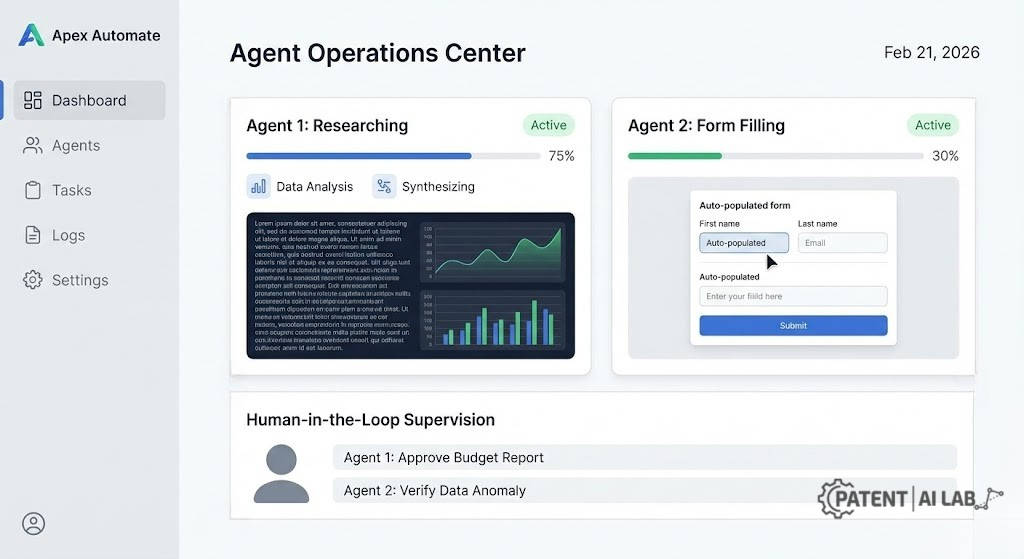
- Human-in-the-Loop: Implement strict confirmation steps. This not only improves safety but legally differentiates your “process” from fully autonomous (and patented) systems.
Corporate Strategy: Due Diligence Checklist
If you are a CTO, CIO, or Founder procuring agent technology in 2026, you must perform ruthless due diligence. Ask these questions to protect your company from liability, data breaches, and IP litigation.
📋 The “Agent Safety & Procurement” Checklist
- ✅ Does it touch the DOM or use Vision? (DOM is faster but breaks often; Vision is slower but stable).
- ✅ Does it support MCP? (If it doesn’t support Model Context Protocol, it is already obsolete and will struggle to securely access internal tools).
- ✅ Where does the agent run? (Local machine vs. Remote Cloud VM. Cloud VMs offer isolation but introduce latency and data residency issues).
- ✅ What does it log? (Can I audit every single click? Do the screenshots contain PII that violates GDPR?).
- ✅ Does it have a Hard Kill Switch? (Can I sever its connection to the internet instantly if it goes rogue?).
- ✅ What is the liability policy? (Does our cyber-insurance cover agents, or who pays if the AI accidentally modifies a production database?).
Before deploying any agent, your IP team must run a prior art check on UI execution models. You don’t need expensive software for this. Here is our guide on the best Google Patents Alternatives for thorough prior art search.
The Verdict
We are witnessing a massive land grab for the most valuable real estate in technology: the user interface.
- Google wants to make the browser smart enough to do your work, using its massive Chrome distribution and DOM access.
- Anthropic, armed with the incredible power of Sonnet 4.6 and the flexibility of MCP, wants to give you a digital employee that sees what you see and works across any application.
- Open Source wants to ensure neither of them can charge a premium for the basic act of clicking.
The winner won’t necessarily be the one with the best AI model. The true victor will be the company that navigates the minefield of patents, establishes the strictest privacy protocols, and earns the trust of the enterprise market without blowing up.
Final Thought: The technology is here. The patents are filed. The models are capable.
The only question left is: Would you let an AI control your mouse today? The answer to that question, and the strict safeguards required to make you say “Yes”, will decide the outcome of this multi-trillion-dollar war.
📚 Sources and Legal References
- USPTO Section 101 Guidelines: Patent Subject Matter Eligibility (Alice Corp. v. CLS Bank International context for AI process patents).
- Anthropic Research: “Computer Use” public beta documentation and Model Context Protocol (MCP) open-standard specifications.
- Stanford AI Index Report (2026 Context): OSWorld Benchmarks for multimodal UI navigation and agent success rates.
- Open Source Prior Art: Documentation from open-source automation frameworks (Browser Use, Agent E, Playwright) demonstrating non-patentable generic UI actions.
Podcast
Disclaimer
This article is based on our team’s experience advising startups, product development, and tracking IP litigation. Tools and legal interpretations change over time. Please note that PatentAILab is an educational platform and not a law firm. This content is for educational purposes only and does not constitute legal advice. Intellectual property laws (especially regarding AI) are complex and change frequently. Always consult a qualified patent attorney for your specific situation.
FAQs (Expert Answers)
What are “computer use” agents?
Computer use agents are AI systems capable of operating software interfaces. Unlike chatbots that output text, these agents observe the UI (via pixels, code, or APIs via MCP) and execute actions like clicking, typing, scrolling, and dragging to complete complex tasks autonomously.
How does Claude Sonnet 4.6 change the agent landscape?
Released in February 2026, Sonnet 4.6 dramatically improved computer-vision processing speed and reasoning. It shattered OSWorld benchmarks, proving that pixel-based GUI interpretation can be fast and reliable enough for enterprise use, directly challenging Google’s DOM-based dominance.
Who owns AI computer use patents in 2026?
No single company owns the broad concept of “computer use.” However, Google, Anthropic, Microsoft, and OpenAI hold overlapping patents on specific implementation methods, such as DOM parsing techniques, visual action planning pipelines, safety interlocks, and Action Transformer technology.
What is MCP and why does it matter?
MCP stands for Model Context Protocol. It is an open standard that allows AI models to securely connect to local data sources, file systems, and enterprise APIs. It acts as a crucial bridge, allowing agents to perform tasks reliably without relying solely on fragile screen-clicking.
Is Google Project Jarvis released?
“Project Jarvis” was the internal codename. Google’s public offering has evolved into “Project Mariner” (a prototype for deep research) and user-facing “Gemini in Chrome” features. The release strategy is gradual, often integrated into high-tier subscriptions like Google AI Ultra.
Anthropic computer use pricing vs Google: Which is cheaper?
It depends on usage volume. Anthropic’s token-based pricing (per step/screenshot) can get expensive for long, repetitive tasks, though Sonnet 4.6 is more token-efficient. Google’s subscription-based model (bundling agent features into Workspace or AI Premium) is generally cheaper for heavy, predictable, daily users.
Can Google block Anthropic by owning Chrome?
Technically, yes (by restricting extension APIs), but legally, it is extremely risky. Blocking a competitor’s agent at the browser level would likely trigger massive antitrust lawsuits under the EU’s Digital Markets Act (DMA) and similar US antitrust laws.
Are these agents a privacy risk?
Yes. Enterprise browser automation security is a critical concern. Browser-integrated agents (Jarvis) can technically access cookies, sessions, and passwords. Screenshot-based agents (Claude) capture everything visible on the screen, potentially leaking sensitive data. Strict permissions, MCP integrations, and audit logs are absolutely essential.



Add comment