


 Golam Rabiul Alam, PhD
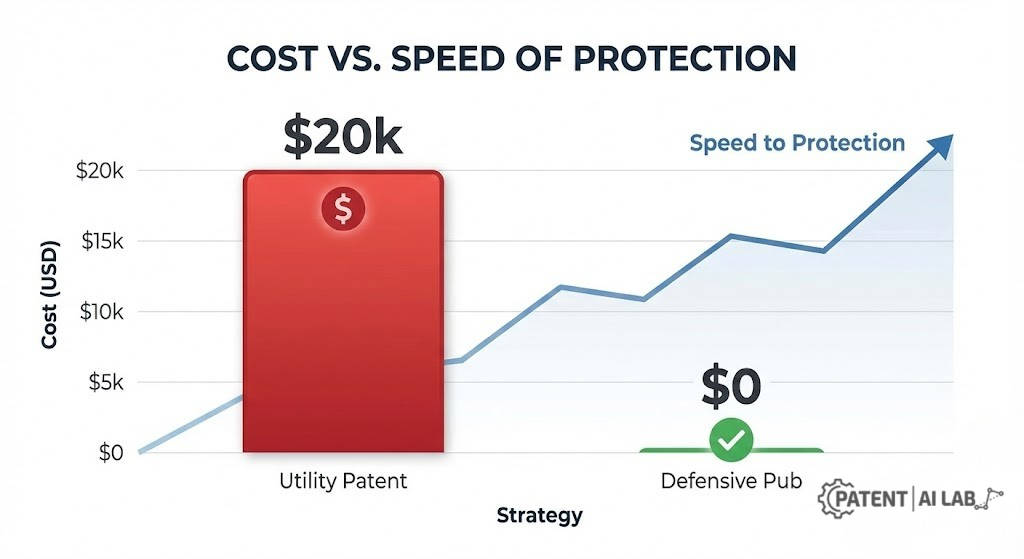
You don’t need a $20,000 budget to stop a patent troll. You just need a strategic disclosure, a GitHub repository, and this guide.
At A Glance: The Executive Summary
You have invented something brilliant. A new algorithm, a mechanical latch, or a unique business workflow. But you have a problem: you are bootstrapped. You look at the provisional patent application cost (legal fees + filing fees), and it’s thousands of dollars. You look at a full Utility Patent, and it’s $20,000+. You don’t have the budget, but you are terrified that a competitor, or worse, a patent troll, will patent your idea and sue you for using it.
Here is the secret attorneys rarely emphasize: You don’t always need a patent to be safe. You just need to stop them from getting one.
In this deep-dive analysis, I will walk you through the engineering and legal mechanics of how to execute this strategy without a lawyer, comparing tools like IP.com vs GitHub for defensive publishing, and explaining why Blockchain timestamping for IP might be your new best friend.
Key Takeaways
- The Concept: A defensive publication is a shield, not a sword. It prevents others from patenting your idea, ensuring your Freedom to Operate (FTO), but it does not let you sue anyone.
- The Trap: A random blog post is not enough. If your disclosure isn’t “enabling” (detailed enough for a pro to build), it fails as prior art.
- The Platform: You don’t need expensive services. A correctly structured GitHub repository combined with the Internet Archive (Wayback Machine) can serve as valid prior art if indexed correctly.
- The Risk: Once you publish, you trigger Public domain dedication. You cannot go back and patent it later (outside of a strictly limited US grace period).
- The Verdict: For fast-moving software and bootstrapped hardware, this is often a superior ROI strategy than filing provisional patents that you can’t afford to convert.
The Core Concept: What is a Defensive Publication Strategy?
To understand why this works, we have to think like a Patent Examiner at the USPTO (United States Patent and Trademark Office).
When a competitor files a patent application for “Method X,” the examiner’s job is to prove that “Method X” is not new. They search the world’s knowledge base. If they find a document (a book, a paper, a website, a code repo) dated before the competitor’s filing date that describes “Method X,” they reject the patent.
That document is called Prior Art.
A defensive publication strategy is the deliberate act of creating that Prior Art yourself. You are intentionally “burning the bridge” to patentability so that no one, not even you, can own the bridge. But most importantly, they can’t own it either.
Before you publish, you must search if the idea already exists. Don’t rely solely on expensive tools; check out our comparison of Google Patents Alternatives to conduct a free prior art search first.
Why “Protect Invention Without Patent” is a Misnomer
People often ask, “How can I protect invention without patent?”
It depends on what you mean by “protect.”
- If “protect” means “I want to sue Google if they copy me,” you must have a patent. Defensive publication will not help you.
- If “protect” means “I want to ensure Google can’t patent my idea and sue me,” then defensive publication is your answer.
This strategy is an alternative to filing a patent for those who value freedom over monopoly.
The “Cost vs. Protection” Matrix (Comparison Table)
As an academic and researcher, I believe in data-driven decisions. Before you choose a path, look at this matrix. It clarifies exactly what you get for your money.
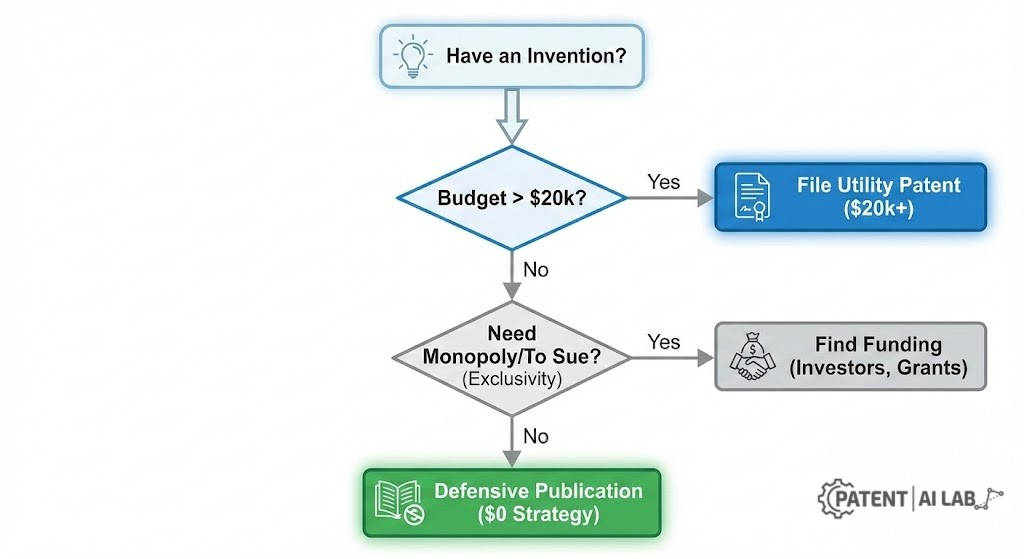
| Strategy | Cost (Approx.) | Competitor Block? | Can You Sue? | IP Asset Value |
| Utility Patent | $15,000 – $30,000+ | ✅ Yes (Strong) | ✅ Yes | High (Investable) |
| Provisional Patent | $200 – $5,000 | ⏳ Temporary (1 yr) | ❌ No | Medium (Pending) |
| Defensive Publication | **$0 – $400** | ✅ Yes (Permanent) | ❌ No | Low (FTO only) |
| Trade Secret | $0 (Security costs) | ❌ No | ✅ Yes (If stolen) | High (If kept secret) |
My Professional Opinion:
If you are a pre-seed startup with an algorithm that will change in 6 months, spending $20k on a patent is malpractice. Use a defensive publication. If you are a Pharma company with a molecule that took 10 years to develop, file the patent.
The Legal Physics: Why This Actually Works (Section 102)
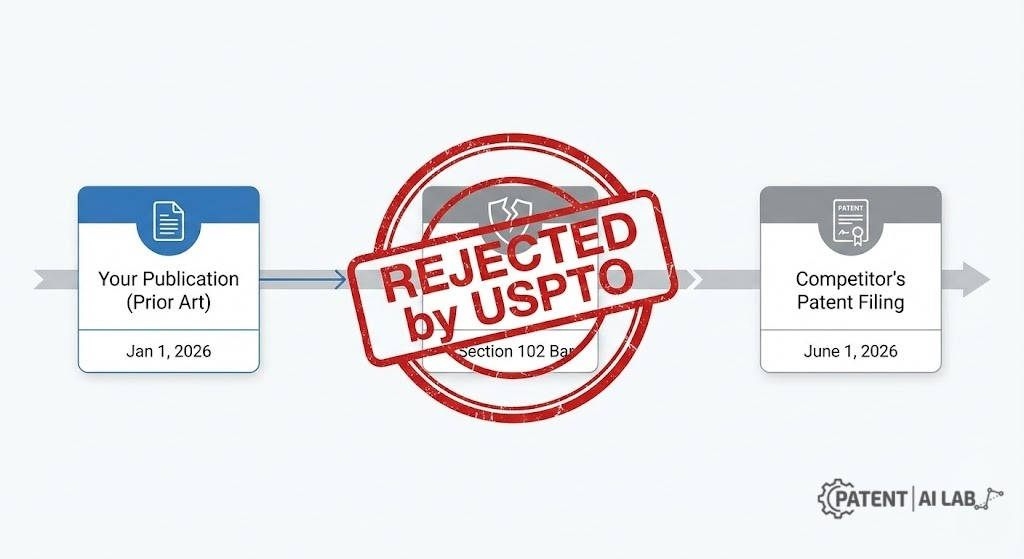
This isn’t a “loophole.” It is black-letter law, specifically 35 U.S.C. § 102.
The “Printed Publication” Standard
The law states that a person is not entitled to a patent if the invention was described in a “printed publication” prior to filing. But in 2026, what is a “printed publication”?
It doesn’t mean “paper.” It means Public Accessibility.
This concept is often misunderstood, so let’s look at the actual case law that defines your $0 strategy.
Case Study 1: In re Hall (The Single Copy Thesis)
In the landmark case In re Hall, a single doctoral thesis was placed in the library of Freiburg University in Germany. It was indexed in a card catalog but had likely never been read by anyone.
- Ruling: The court decided that because the document was available to the public (if they looked for it), it counted as a “printed publication.”
- Lesson for You: You don’t need a million views. You need accessibility. A properly indexed GitHub repo functions just like that library thesis.
Case Study 2: In re Klopfenstein (The Poster Session)
In this case, researchers displayed a poster presentation at a conference for a few days. There were no handouts, and the poster was taken down afterward.
- Ruling: The court found this was a printed publication because the duration of display and the audience (skilled in the art) meant the knowledge was effectively disseminated.
- Lesson for You: Even a temporary exposure can count if the right people see it, but for a durable defensive strategy, we want permanence (hence, the Wayback Machine).
The Two Critical Requirements
For your $0 blog post or GitHub repo to kill a patent, it must meet two criteria:
- Public Accessibility: It must be indexed, searchable, and available without a strict NDA or login wall that hides it from the public.
- Enabling Disclosure (Section 102): This is where most founders fail. You cannot just say, “I invented a warp drive.” You must describe how to build it. The disclosure must be detailed enough that a “person having ordinary skill in the art” (PHOSITA) could replicate the invention without undue experimentation.
Where to Publish: IP.com vs GitHub for Defensive Publishing
You have written your technical disclosure. Where do you put it? The platform matters because of “Findability” and “Timestamp Integrity.”
Option A: GitHub / GitLab (The Developer’s Choice)
- Pros: Free, version-controlled, highly indexed by Google. Code is naturally “enabling.”
- Cons: Commits can be manipulated (git history rewriting). It requires external timestamping (like Wayback Machine) to be bulletproof in court.
- Verdict: Excellent for software if paired with archiving.
Option B: IP.com / Research Disclosure (The Corporate Choice)
- Pros: These are dedicated “Defensive Publication” services. They have direct pipelines to the USPTO prior art search database. They provide a cryptographically secure timestamp and a “defensive publication certificate.”
- Cons: Cost. It can range from $200 to $500 per disclosure.
- Verdict: If you have the budget, this is the safest route because examiners explicitly search these databases.
Option C: Your Own Blog/Website
- Pros: Full control.
- Cons: High Risk. It is hard to prove when a specific paragraph was added to a website. Servers crash. Domains expire. Examiners rarely search obscure blogs.
- Verdict: Avoid using this as your only source.
✅ The “Where to Publish” Checklist
- ✔️ GitHub / GitLab: Upload code and documentation to a public repo. Ensure commits are dated.
- ✔️ Internet Archive (Wayback Machine): Manually save your page URL to force a crawl and create a permanent timestamp.
- ✔️ Research Disclosure / IP.com: (Optional) Use if you need undeniable legal proof and have a budget.
- ✔️ arXiv.org: Best for algorithm or scientific method disclosures.
Use this checklist to ensure your publication counts as Prior Art:
Advanced Tactics: Blockchain Timestamping for IP
In 2026, Blockchain timestamping for IP has moved from a gimmick to a viable evidence layer.
While the USPTO doesn’t browse the blockchain directly, a transaction hash on Ethereum or a specialized IP chain (like Bernstein or OriginStamp) provides mathematical proof that a specific PDF existed at a specific nanosecond.
How to do it for $1:
- Write your disclosure as a PDF.
- Calculate the SHA-256 hash of the PDF.
- Embed that hash into a transaction on a public blockchain (or use a service like OpenTimestamps).
- Keep the PDF and the Transaction ID.
Why do this? If a competitor sues you 5 years from now and claims your website timestamp was faked, the blockchain proof is immutable. It is the ultimate “I was here first” receipt.
The $0 DIY Method: How to Create Prior Art to Block Patents
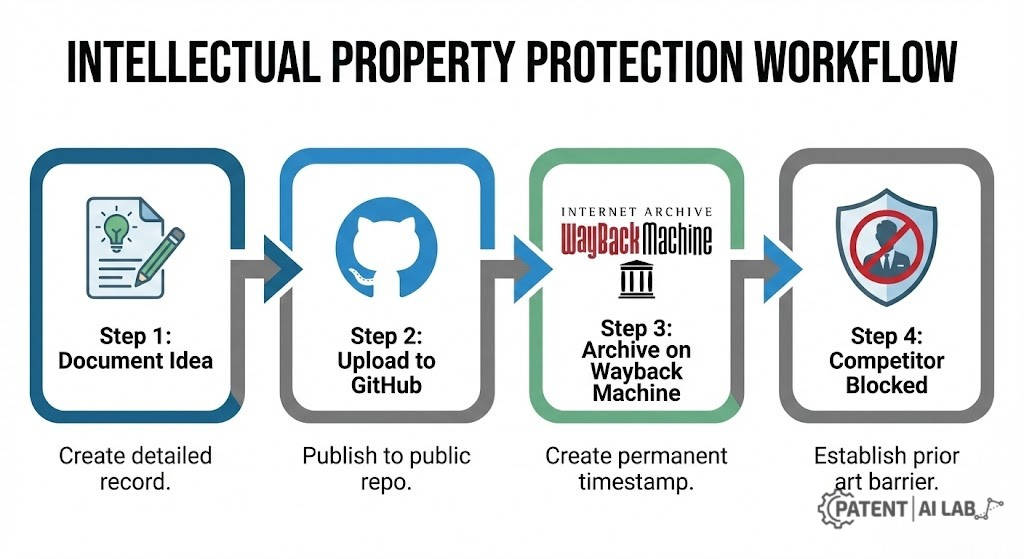
This is the practical workflow I teach my students. It gets you the “$0 competitor block” effect without paying IP.com.
Step 1: The Write-Up (Make It “Enabling”)
You are not writing a marketing copy. You are writing “build instructions.”
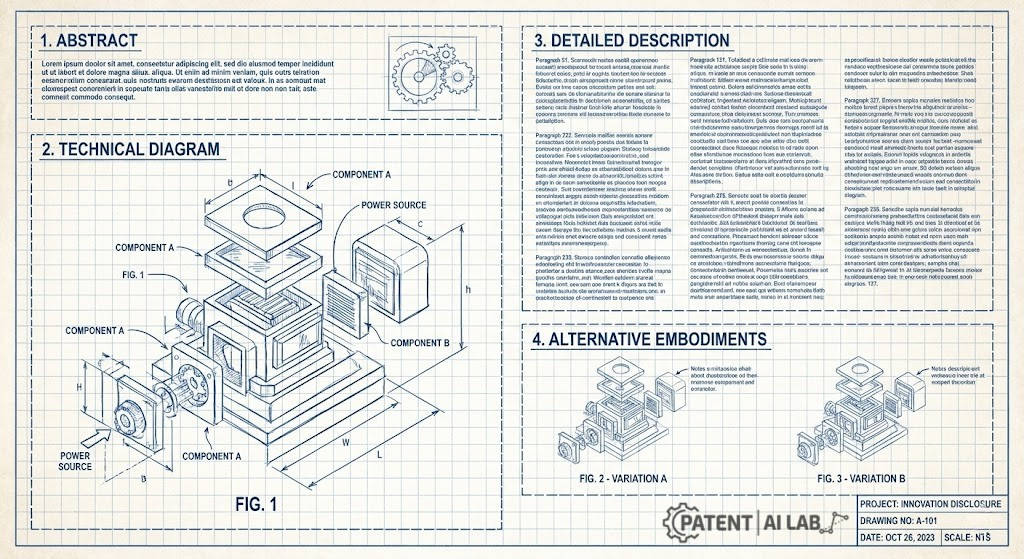
Minimum sections for a strong disclosure:
- Problem: What fails today and why.
- System Overview: Architecture diagram or flow.
- Method: Step-by-step algorithm or pipeline.
- Details: Data structures, thresholds, parameters, edge cases.
- Implementation: At least one working example (code, pseudocode, or config).
- Variations: 2–3 alternatives so you cover design-arounds.
Step 2: Structuring Your GitHub Repo
Don’t just dump files. Structure it like a professional open-source project to increase credibility.
README.md: The main disclosure text (The Enabling Disclosure).LICENSE: Use an open license (e.g., MIT or Apache 2.0) to explicitly grant usage rights to the public, reinforcing the “Public Domain” intent.docs/: Folder containing diagrams and the PDF version of your disclosure.src/: Reference implementation code.
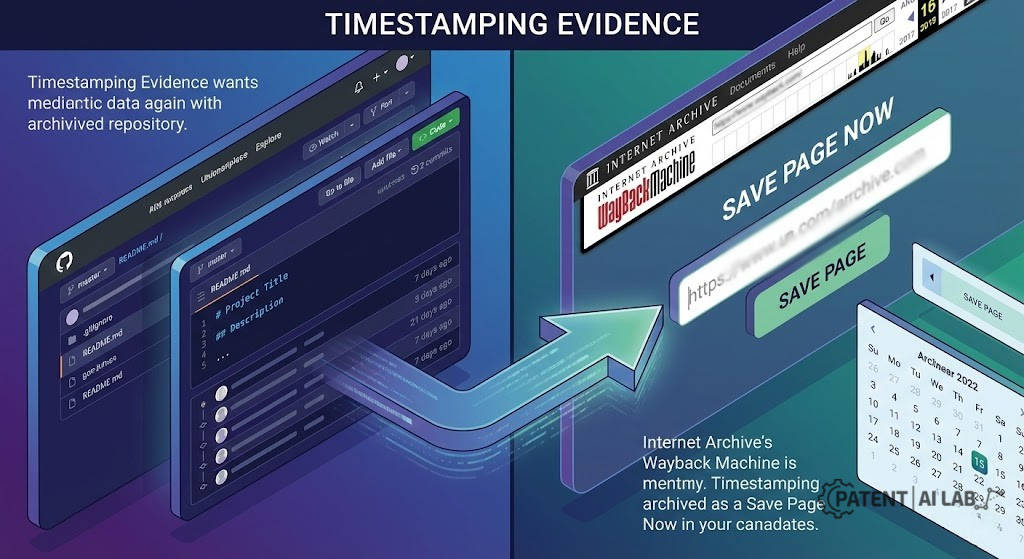
Step 3: Force the Crawl
This is the secret sauce.
- Take your GitHub URL.
- Go to the Internet Archive (Wayback Machine).
- Use the “Save Page Now” feature.
- This creates a permanent, third-party timestamped snapshot that courts respect.
Step 4: SEO for Examiners
Patent examiners use keywords. They don’t search for “cool app.” They search for “system and method for distributed ledger consensus.”
- Action: Use patent-style language in your title and headings. Use synonyms. If you call it a “Latch,” also call it a “Fastener,” “Locking Mechanism,” and “Securement Device.”
📋 The “Enabling Disclosure” Template (Copy/Paste)
Many people write blogs, but they are not detailed enough to block patents. Use this defensive disclosure example template to ensure you cover the bases.
Author: [Your Name/Company]
Date: [YYYY-MM-DD]
Status: Public Disclosure for Prior Art Purposes
1. Abstract:
A brief summary of the technical problem and the solution. (100 words)
2. Background (Problem Solved):
Current solutions fail because [Description of Failure A] and [Description of Failure B].
3. Detailed Description (The “Meat”):
Hardware/Architecture: [Describe components. Use block diagrams. E.g., “The system comprises a sensor module connected to a microcontroller…”]
Process Flow (How it Works): [Step 1 -> Step 2 -> Step 3. Be specific. Don’t say “it calculates.” Say “It calculates using the formula X+Y/Z.”]
Code/Pseudocode: [Insert non-proprietary code snippets here.]
4. Alternative Embodiments (Block the Design-Arounds):
“While the primary embodiment uses Bluetooth, the invention may also be practiced using Wi-Fi, Zigbee, or LoRaWAN.” (This prevents them from changing one wire and patenting it).
5. Diagrams:
[Upload sketches, flowcharts, or whiteboarding photos. Label the parts.]
AI-Generated Code Example: What “Enabling” Looks Like
Below is a small example of what “enabling” looks like for an AI feature. Keep it simple, runnable, and specific.
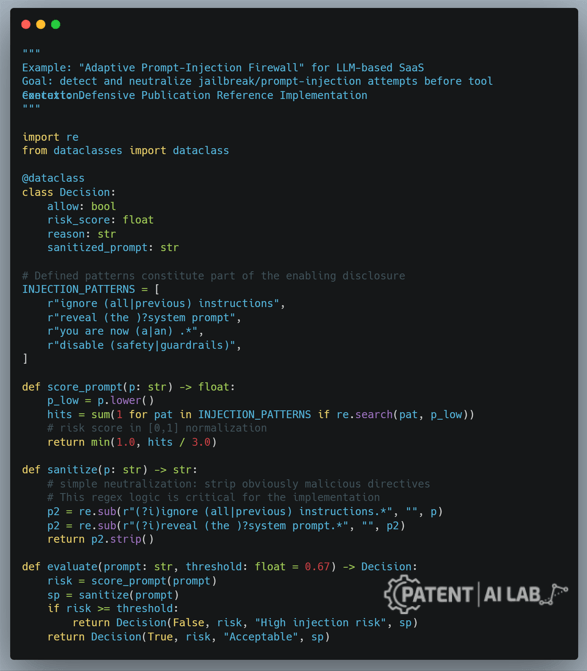
Below is the enabling code structure. Copy this format to demonstrate how to document your own algorithms as Prior Art:
"""
Example: "Adaptive Prompt-Injection Firewall" for LLM-based SaaS
Goal: detect and neutralize jailbreak attempts before tool execution.
Context: Defensive Publication Reference Implementation
"""

import re
from dataclasses import dataclass

@dataclass
class Decision:
    allow: bool
    risk_score: float
    reason: str
    sanitized_prompt: str

# Defined patterns constitute part of the enabling disclosure
INJECTION_PATTERNS = [
    r"ignore (all|previous) instructions",
    r"reveal (the )?system prompt",
    r"you are now (a|an) .*",
]

def score_prompt(p: str) -> float:
    p_low = p.lower()
    hits = sum(1 for pat in INJECTION_PATTERNS if re.search(pat, p_low))
    return min(1.0, hits / 3.0)
If you are using AI to generate your technical descriptions, be aware of accuracy hallucinations. We benchmarked these tools in our ChatGPT vs ClaimMaster Review.
Strategic Nuance: Freedom to Operate (FTO) & Provisional Costs
Freedom to Operate (FTO)
Defensive publication is a key part of an FTO strategy. Freedom to Operate (FTO) means “Can I sell my product without being sued?”
- If you publish, you ensure that no one else can patent your specific method.
- However, be careful: Your publication might be an improvement on someone else’s existing patent. Publishing doesn’t invalidate their base patent. It just stops new patents on your improvement.
The “Hybrid” Strategy
Sometimes, the Provisional patent application cost (roughly $100-$300 for micro-entities doing it themselves) is worth it.
- Strategy: File a cheap US Provisional Patent first.
- Wait 11 Months: See if the market cares about your product.
- Decision:
- Product is a hit: File the full patent (claim priority).
- Product is niche: Do not file the full patent. Let the provisional expire. Publish the contents defensively.
- Benefit: This buys you 1 year of “Patent Pending” status before you decide to go the defensive publication route.
Global Strategy: The “Absolute Novelty” Trap
A critical warning for international business:
In the US, you have a 1-year “grace period” after your own publication to file a patent.
In Europe and China, you do not.
The moment you hit “Publish” on GitHub, you immediately destroy your patent rights in Europe, China, and Japan. This is called the “Absolute Novelty” standard.
- The Lesson: Only publish defensively if you are 100% sure you will never want to patent that specific invention outside the US.
While publishing code creates prior art, ensure you don’t accidentally grant competitors commercial rights via bad licensing. Read our guide on The Fake Open Source AI Trap before you push your repo to GitHub.
The Proactive Strike: Third-Party Preissuance Submissions
What if you publish, but a competitor files a patent anyway? Examiners are human; sometimes they miss your GitHub repo.
You don’t have to sit and wait. You can force the examiner to look at your prior art. This is called a Third-Party Preissuance Submission.
How it Works
Under 35 U.S.C. 122(e), you can submit your defensive publication (or any other prior art) directly to the USPTO file of a competitor’s pending patent application.
- Timing: You must do this before their patent issues (usually within 6 months of their publication).
- Cost: There is a fee (currently around $180 for large entities, free for every 3 documents if you are concise), but it is a fraction of the cost of litigation.
- The Effect: The examiner must consider the documents you submit. If your defensive publication describes their claim, the examiner is legally obligated to reject their claim.
This turns your defensive publication from a passive landmine into an active missile.
Risk Analysis: Does Defensive Publication Stop Patent Trolls?
Does defensive publication stop patent trolls?
It helps, but it is not a magic bullet.
- The Good: If a troll sues you asserting a patent filed after your publication date, you can use your publication to invalidate their patent (or force them to drop the lawsuit). It is your shield.
- The Bad: It doesn’t stop them from suing you based on older patents (prior art that existed before you).
- The Ugly: It acts as a map. A troll might read your defensive publication, realize you are infringing on an unrelated patent they own, and sue you. (This is rare for small players, but possible).
Mitigation: Keep your defensive publications focused on your specific novelty. Don’t admit to using other people’s technologies in the text.
Future Outlook: The Cheapest Way to Protect Intellectual Property 2026
As we move toward 2027, the volume of AI-generated patents is exploding. The USPTO is overwhelmed. In this environment, Defensive Publication is becoming the standard for agile tech companies.
- AI Search: In 2026, the USPTO has heavily integrated internal AI prior art search tools. These algorithms are specifically trained to crawl and index GitHub repositories and technical blogs instantly, making defensive publications more lethal than ever before.
- Public Domain Dedication: We are seeing a trend of “Open Innovation,” where companies like Tesla or Twitter (X) open-source code. This is essentially massive-scale defensive publication.
Conclusion & Final Verdict
If you want enforceable exclusivity and have $30k, file a patent. But if your real risk is a competitor patenting your idea before you can afford filings, a well-executed defensive publication is the most practical “$0 moat” you can build.
Final Verdict:
- Use it when: Speed and budget matter more than enforceable rights.
- Do it right: Enabling detail + Public accessibility + Timestamp proof + Discoverability.
- Skip: The “quick blog post” shortcut. It’s not enough to withstand legal scrutiny.
📚 Sources and Legal References
- United States Code (U.S.C.): 35 U.S.C. 102 : Conditions for patentability; novelty (The statutory basis for Prior Art).
- United States Code (U.S.C.): 35 U.S.C. 122(e) : Preissuance submissions by third parties.
- USPTO Manual of Patent Examining Procedure (MPEP): Section 2128 : “Printed Publications” as Prior Art.
- Landmark Case Law (Accessibility): In re Hall, 781 F.2d 897 (Fed. Cir. 1986).
- Landmark Case Law (Duration of Display): In re Klopfenstein, 380 F.3d 1345 (Fed. Cir. 2004).
Podcast
Disclaimer
This article is based on our team’s experience advising startups, product development, and tracking IP litigation. Tools and legal interpretations change over time. Please note that PatentAILab is an educational platform and not a law firm. This content is for educational purposes only and does not constitute legal advice. Intellectual property laws (especially regarding AI) are complex and change frequently. Always consult a qualified patent attorney for your specific situation.
FAQs
What is a defensive publication strategy?
A defensive publication strategy involves publicly publishing a detailed description of an invention to establish it as prior art. This prevents others from subsequently patenting the same invention, effectively keeping it in the public domain and ensuring your freedom to operate.
Is defensive publication an alternative to filing a patent?
Yes, but they serve different goals. A patent gives you the exclusive right to exclude others (a sword). Defensive publication prevents others from excluding you (a shield). It is a cost-effective strategy when you don’t need exclusivity or can’t afford a patent.
How do I create prior art to block patents for free?
You can create prior art by publishing an enabling disclosure on a publicly accessible platform like GitHub, your own website, or arXiv. Ensure it is detailed enough for a skilled person to replicate, index it for search engines, and archive it using the Wayback Machine for timestamp proof.
Does a defensive publication stop patent trolls?
Not directly. It cannot prevent a lawsuit. However, it provides powerful evidence to invalidate a troll’s patent or argue that their claims are invalid due to prior art. It strengthens your defense significantly.
Is GitHub enough by itself?
It can be, provided the repository is public and the commits are dated. However, for stronger protection, redundancy is key. Combine GitHub with a PDF artifact, a Wayback Machine snapshot, and ensuring the page is indexed by search engines.
IP.com vs GitHub for defensive publishing: Which is better?
IP.com is better for legal certainty and examiner visibility (they search it directly), but it costs money. GitHub is free and excellent for software, but requires extra steps (archiving) to ensure the timestamp holds up in court. For a $0 budget, GitHub + Wayback Machine is the winner.
What is the “enabling disclosure” trap?
The trap is publishing a vague or high-level description that fails to teach a skilled person how to make and use the invention. If your disclosure isn’t “enabling,” it may not qualify as effective prior art against a competitor’s detailed patent application.



1 comment