


 Golam Rabiul Alam, PhD
Three years ago, while leading a mid-sized product team, we were drowning in technical debt. During one of our high-pressure refactoring sessions, an uncomfortable question halted our entire sprint: “Are we legally safe using these APIs, or are we building a liability?”
That single question triggered six months of legal audits and nearly forced a six-figure rewrite of our entire architecture. Most developers still operate under the dangerous assumption that since Google won, APIs are free to clone without consequence. In reality, that overconfidence is exactly how budgets get destroyed. The real lesson from the Google vs Oracle case summary isn’t about legal permission: it’s about the high price of architectural laziness.
Article at a Glance
✓ The “Fair Use” Nuance: A careful reading of any Google vs Oracle case summary shows that the ruling protected the copying of “declaring code” (headers) for interoperability, not the actual implementation logic. Treating this as blanket permission to clone APIs is a serious architectural error.
✓ Architectural Laziness: The primary risk is no longer just copyright infringement, but long-term coupling. Teams mirroring external API structures often trade short-term speed for permanent technical debt and legal exposure.
✓ Intent as Evidence: Courts look at design intent. If internal documentation or Jira tickets suggest you copied an API simply to replace a competitor’s market share, you lose the “Transformative Use” defense that protected Google.
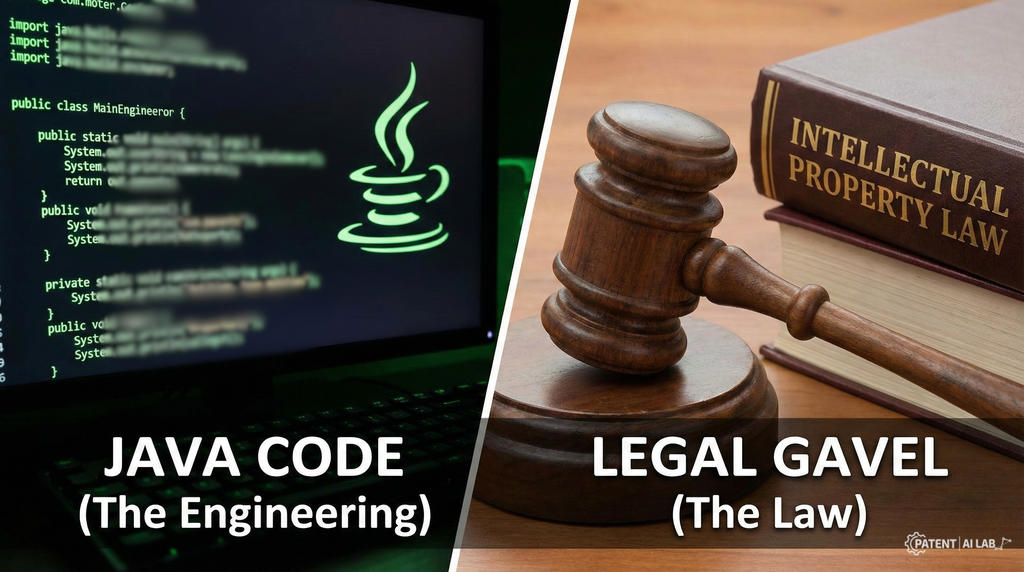
What struck me wasn’t the Supreme Court’s final ruling. It was how misunderstood the practical lesson was inside engineering teams like mine. Most developers reduced the verdict to one dangerous sentence: “Google won, so APIs are free to copy.” That assumption nearly cost us a six-figure rewrite.
A mistake at that architectural level doesn’t just waste time; it destroys budgets. For a clearer picture of how much IP-related missteps or protections can actually cost a software team, see our full breakdown on Software Patent Cost.
How Did the Impact of Google vs Oracle on Software Development Actually Play Out?
Short answer: It made teams sloppier before it made them smarter.
The common narrative says the impact of Google vs Oracle on software development was liberating. APIs were declared “Fair Use.” Innovation was unlocked. We could all move fast again.
From practical observation, the ruling did not remove risk. Instead, it shifted responsibility downward. It moved the burden from the courts to engineering leadership.
APIs became legally safer only when used with restraint, documentation, and clear intent. Teams that treated the ruling as a green light to clone functionality blindly were the ones left exposed. Fair use, in practice, is highly contextual. And context is exactly what rushed product teams tend to ignore.
The Evidence: What My Team Did Differently
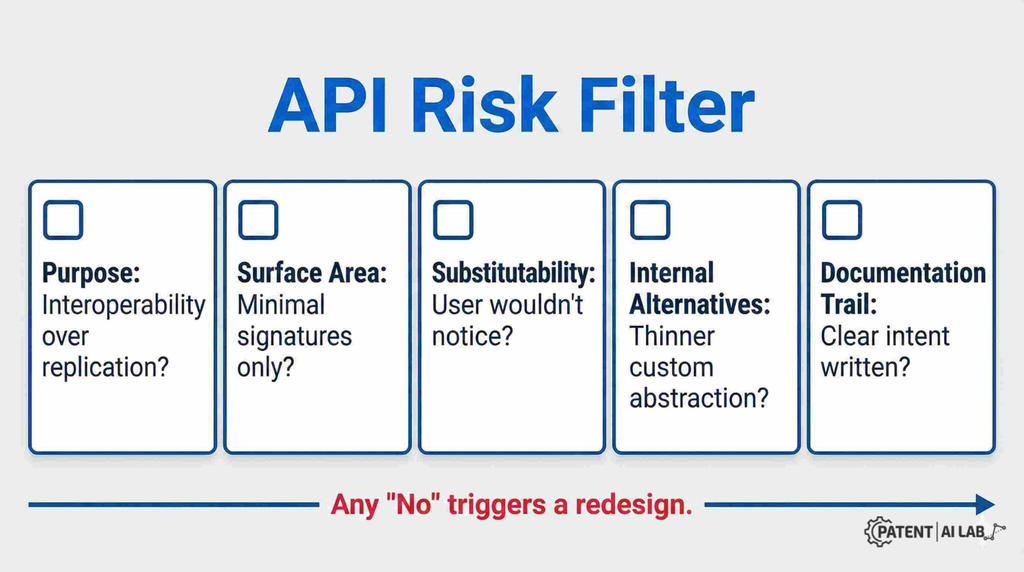
After a tense meeting with our legal and product heads, we made a hard call: We paused all new external API dependencies for six weeks. Instead of asking “Is this allowed now?” we used the Google vs Oracle case summary to ask a more practical question: “Can we justify this use if challenged?”
Purpose: Are we reusing the API to enable interoperability (good), or just to replicate a competitor’s product behavior (bad)?
Surface Area: Are we copying minimal method signatures or recreating large, unnecessary structural groupings?
Substitutability: If our product replaced the original platform, would a user even notice the difference?
Internal Alternatives: Could we design a thinner, custom abstraction instead of mirroring the external API?
Documentation Trail: Can we explain our intent clearly, in writing, to a non-engineer?
The Takeaway: The Risk Most Teams Still Miss
Here is the uncomfortable part. When you analyze a standard Google vs Oracle case summary, you realize the biggest risk after the ruling isn’t copyright infringement. It is architectural laziness.
I see teams now leaning on external APIs as shortcuts, not interfaces. They mirror naming conventions, class hierarchies, and even error logic just because “it’s already there.”
This creates long-term coupling, not innovation. If “Fair Use” ever gets narrowed again in the future, those systems will be the hardest to unwind.
Similar to how fair use is currently being fiercely debated in generative AI, understanding these legal boundaries is critical. To see how these exact arguments are playing out today, you can read our breakdown of the NYT vs. OpenAI Lawsuit Update.
Another overlooked risk is evidentiary. Courts look at behavior: Slack messages, commit histories, and design docs. If your internal Jira tickets say, “Let’s just copy X because users expect it,” that is a problem. Intent matters more than engineers like to admit.
So yes, Google won. But only under specific conditions that disciplined teams naturally follow anyway.
Final Reflection: What I’d Recommend Now
If I had to reduce this to one rule for engineering teams: “If your team cannot explain why an API is used without mentioning ‘convenience,’ pause and redesign.”
If starting that project today, I would still rely on APIs, but I would slow down the initial implementation. Force the design conversation early. Write your intent into the repository, not just the README.
Podcast
This automated audio brief outlines the primary data, analysis, and strategic insights covered in this guide.
FAQ: Common Questions on Google vs. Oracle & APIs
Did Google win the case against Oracle?
Yes. In 2021, the US Supreme Court ruled in favor of Google. A detailed Google vs Oracle case summary shows that the court decided Google’s copying of the Java SE API declaring code constituted “Fair Use” as a matter of law, allowing developers to reimplement APIs to ensure interoperability.
Does this mean I can copy any API code I want?
No. The ruling specifically protected “declaring code” (the headers/interface) needed for interoperability. It does not protect “implementing code” (the actual logic behind the API). Copying the implementation is still copyright infringement.
How does the impact of Google vs Oracle on software development affect startups?
It reduces the fear of litigation when creating compatible software. However, startups must still ensure they are using APIs to create new products (transformative use) rather than just cloning an existing market substitute.
Are APIs copyrightable?
The Supreme Court bypassed the question of whether APIs are copyrightable and focused on “Fair Use.” However, the general consensus is that while the structure might be copyrightable, using it for interoperability is often permitted.
Does the Google vs Oracle ruling protect AI companies scraping APIs for training data in 2026?
Not necessarily. The Google ruling focused on interoperability (making two systems work together). Scraping an API to train a Large Language Model (LLM) is a different use case altogether. Recent 2026 lawsuits emphasize that courts evaluate the specific intent and market impact of AI training data, meaning developers cannot automatically use the Oracle case as a defense for unauthorized data scraping.
Sources and Legal References
The legal rulings, fair use guidelines, and case analyses presented in this guide are derived from official court documents and copyright frameworks. You may verify specific legal standards via the following resources:
-
1. Supreme Court Opinion (2021)
The official 6-2 ruling in Google LLC v. Oracle America, Inc. declaring Google’s API copying as fair use.
Read the Official PDF (supremecourt.gov) -
2. US Copyright Office: Fair Use Index
Guidelines on how the four factors of fair use are evaluated in software and code.
View Copyright.gov Guidelines -
3. Electronic Frontier Foundation (EFF) Analysis
Legal analysis on the impact of the ruling on software interoperability and startup innovation.
Read EFF Analysis
Disclaimer & Legal Notice
PatentAILab is an independent educational research platform and is not a licensed law firm or financial advisory service. The data, patent analysis, and strategic insights provided in this article are for informational and educational purposes only and do not constitute legal, investment, or business advice. Intellectual property outcomes depend on specific technical facts, jurisdictional laws, and drafting execution. Always consult a certified patent attorney and a qualified financial advisor before making IP filing or venture capital investment decisions.




2 comments